



10 Georgia ABA Therapy Resources for Families
Explore 10 Georgia ABA therapy resources, compare care settings, review insurance questions, and find practical ways to seek financial help.

You've got a referral in hand, your child's doctor or school team mentioned ABA, and now you're staring at a screen full of Georgia providers that all seem to say similar things. Some offer center-based care. Some mention in-home services. Some talk about insurance verification, but that still doesn't answer the question you probably care about most right now. Who serves your area, who has space, and what might your family need to do next?
ABA stands for Applied Behavior Analysis. In plain language, it's a structured therapy approach that helps a child with autism build skills such as communication, daily routines, play, and safety behaviors. In Georgia, access can depend on where you live, the kind of setting you want, your child's needs, and how your insurance or Medicaid works in your specific case.
This guide compares Georgia ABA therapy resources in a way that's easier to act on. For each option, you'll see the service setting, likely geographic reach, standout specialties, questions worth asking, and payment issues to check early. I'm using person-first language by default, such as “child with autism,” while recognizing that some families prefer identity-first language. If your family uses different wording, that's completely valid.
Table of Contents
- 1. ABA Finder
- 2. Hopebridge Autism Therapy Centers
- 3. Marcus Autism Center
- 4. BlueSprig Autism
- 5. Kadiant
- A better fit for families comparing setting, distance, and insurance steps at the same time
1. ABA Finder
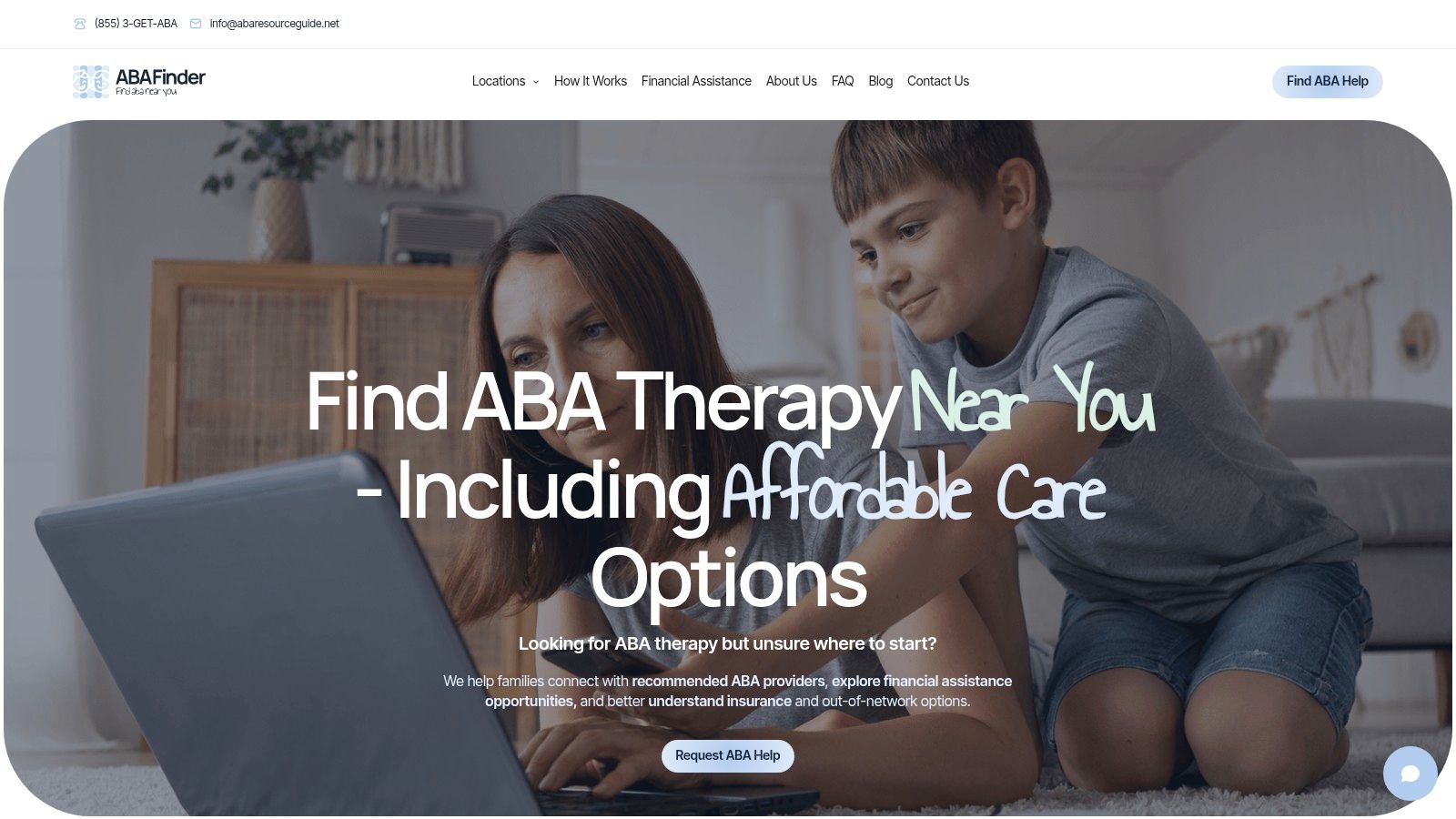
You may be at the stage where every clinic website starts to blur together. One says center-based. Another says in-home. A third mentions insurance verification, but you still do not know which options are realistic for your ZIP code or what you may be asked to pay. ABA Finder is built for that early sorting step.
ABA Finder is a family support resource, not a therapy clinic. It helps Georgia families compare provider types, ask better intake questions, and work through payment questions before they spend days calling offices one by one. If you want a starting point that is Georgia-specific, the Georgia ABA therapy help page is the place to begin.
What makes this option different in a guide like this is the second track it adds. Many provider directories stop at names and locations. ABA Finder also helps families make sense of the money side, which is often where stress rises fast. If insurance terms like out-of-network, deductible, prior authorization, or coinsurance feel abstract, the goal is to translate them into plain next steps, such as what to ask your plan, what paperwork may matter, and what other affordability paths may be worth checking.
That can be especially useful in Georgia, where access often varies by region. A provider that looks close on a map may only serve certain counties, offer only one setting, or have different intake steps depending on the child's age, needs, or insurance plan. ABA Finder helps families compare those differences early instead of treating every provider as if it works the same way.
A simple way to picture it is this. If a provider directory is a phone book, ABA Finder works more like a guide who helps you narrow the list and prepare your questions before you call.
You can also reach ABA Finder by phone at (855) 3-GET-ABA or by email at info@abaresourceguide.net. The support is free to families. Expectations still need to stay grounded. No referral resource can promise provider openings, insurance approval, eligibility, or financial assistance, because those details depend on the clinic, the plan, and your location.
Practical rule: ABA Finder is often the better first stop if your family needs both a provider shortlist and help understanding possible costs.
A few details to keep in mind:
- Best fit: Families who want help comparing Georgia providers by setting, service area, and payment questions, not just by name.
- Main strength: Plain-language guidance on insurance terms and other affordability routes that may be worth asking about.
- Possible limitation: ABA Finder does not deliver therapy. The final fit still depends on which providers serve your area and how each intake process works.
Website: ABA Finder
2. Hopebridge Autism Therapy Centers
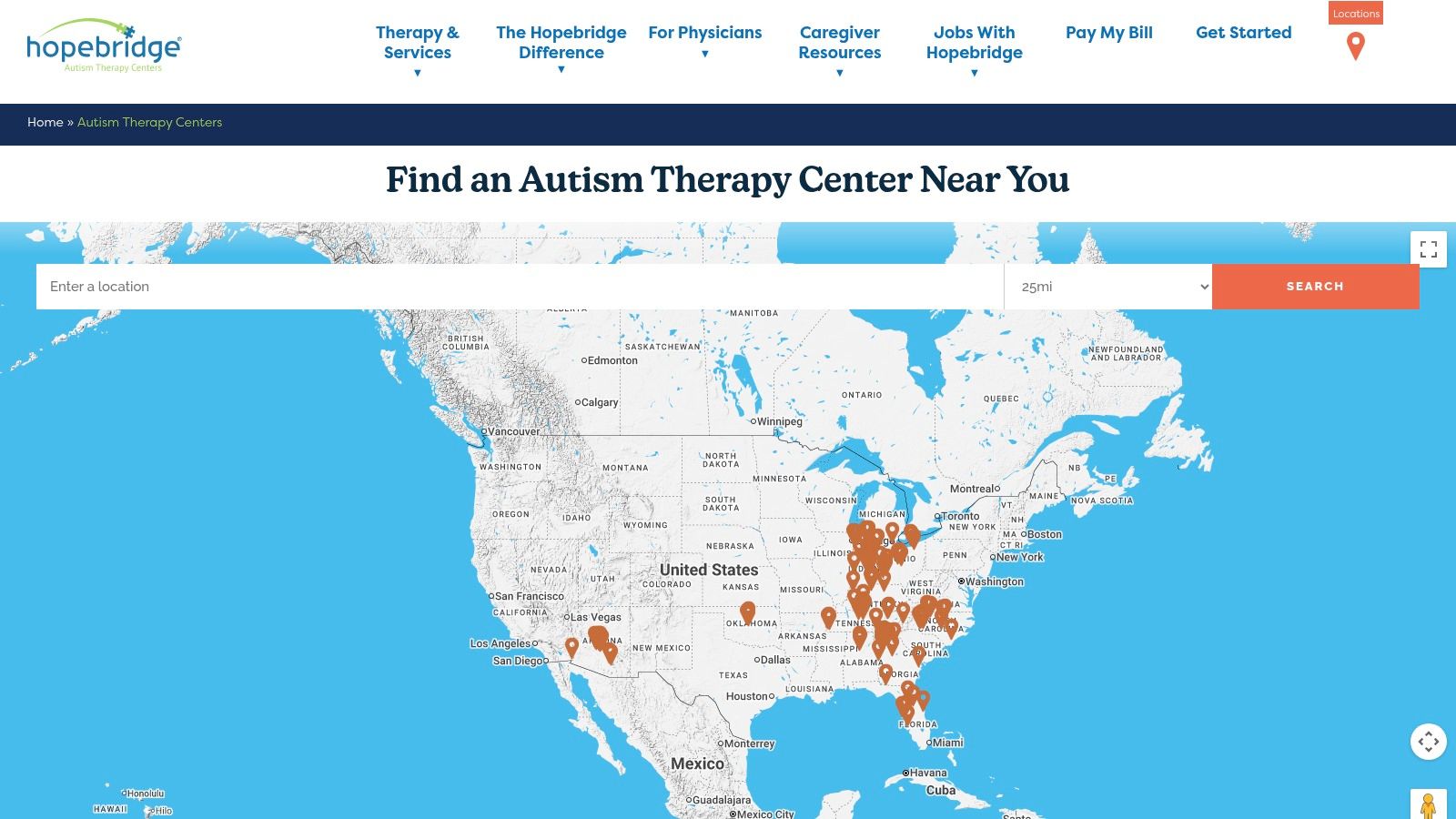
A parent in Georgia may start with a simple goal. Find ABA therapy close to home. Then the questions show up fast. Does the clinic mainly work in a center, does that location also offer speech or occupational therapy, and does the nearest site take children in your child's age range?
Hopebridge often comes up for families who want several services under one roof. That setup can reduce the back-and-forth that happens when evaluation, ABA, speech, and occupational therapy are all handled by different organizations. For a busy parent, it can feel less like coordinating four separate errands and more like keeping one calendar.
Its model is usually centered on clinic-based care in Georgia, with coverage stronger in larger metro areas than in every part of the state. That matters because a provider can be a strong match on paper and still be hard to use if the closest center is too far for regular visits. If your family needs home-based therapy, after-school hours, or a smaller local service area, ask those questions early.
The setting itself is part of the decision.
A center-based program can work well for children who benefit from routine, predictable spaces, and access to multiple therapists in one place. For other families, the travel time, school schedule, or need for services at home may make the same setup less practical. The provider name tells you only part of the story. The day-to-day logistics tell you the rest.
Before you call, it helps to sort your questions into two buckets: fit and access.
For fit, ask whether your nearest Georgia location offers only ABA or also speech and occupational therapy, whether diagnostic services are available there, and how parent training is handled. For access, ask which insurance plans that center works with, what the intake steps look like, and whether start times differ by service line. Insurance language can get confusing here. “In network” usually means the provider has a contract with your plan, but families still need to ask about authorization, evaluation requirements, and any costs that may apply under their specific plan.
Website: Hopebridge Autism Therapy Centers
3. Marcus Autism Center

A parent may start by looking for "ABA in Georgia" and end up needing something more specific. If mealtimes are unsafe, behavior is intense across settings, or several specialists are already involved, the question shifts from "Who offers therapy?" to "Who can coordinate the right kind of care?"
Marcus Autism Center often comes up in that second category. Because it is part of Children's Healthcare of Atlanta, families may look here when they want ABA-related care connected to a larger medical system, along with programs that can address feeding, severe behavior, or school-related concerns.
That difference matters. A hospital-connected center can work like a hub, with more than one service line under the same roof or within the same system. For some families, that can reduce the back-and-forth of repeating the same history to separate providers. For others, the tradeoff may be a narrower fit, longer intake steps, or program requirements tied to a child's specific needs.
Instead of asking only, "Do they offer ABA?" it helps to ask which Marcus program matches your child and what the first step is for that program. One service may start with an evaluation. Another may require a referral, prior records, or a review to see whether the child fits that clinic's focus.
Billing questions also deserve plain language. "In network" usually means the provider has a contract with your insurance plan, but that does not automatically tell you which Marcus services are covered, whether authorization is needed, or whether different departments bill separately. If your family is comparing a hospital-based option with a stand-alone ABA provider, ask the same payment questions at both so you can compare them fairly. If cost feels hard to predict, ABA Finder can also help families work through a separate affordability path while they compare providers and intake requirements.
Three questions can make a call to Marcus more useful:
- Which specific program should we ask about based on our child's feeding, behavior, communication, or school concerns?
- Before scheduling, do you need a referral, prior evaluation, or insurance authorization?
- If more than one service is recommended, how are those visits and charges handled?
Website: Marcus Autism Center
4. BlueSprig Autism
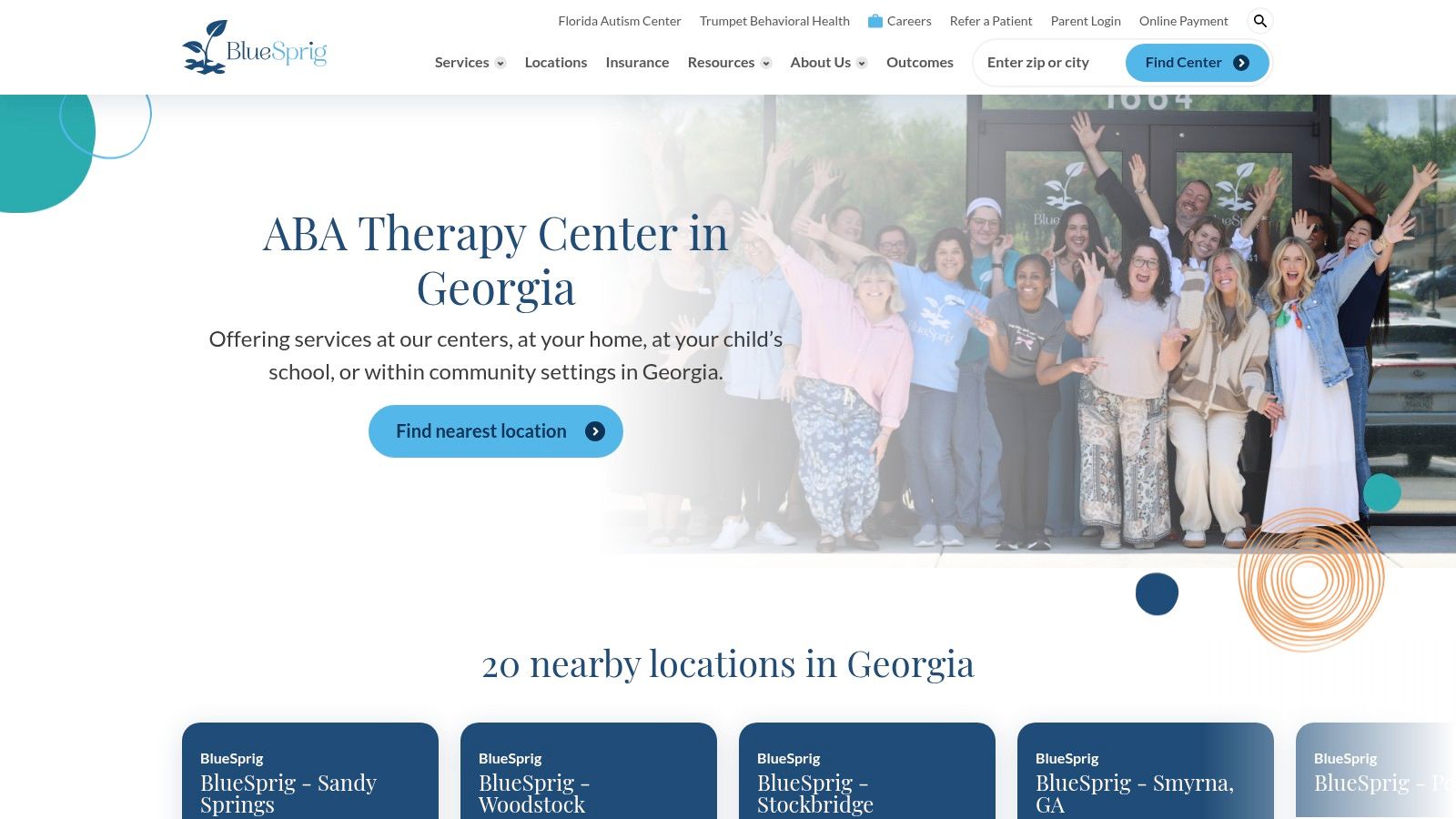
A common Georgia parent problem sounds simple at first: you need ABA, but your real question is whether the nearest clinic can serve your child's age, goals, and schedule. BlueSprig stands out most for reach. If your shortlist starts with, "What is close enough to drive to every week?" this is one of the names that often comes up.
That broad Georgia footprint can help in a very practical way. A larger clinic network may give families more than one location to check, and that matters in a state where commute time can shape whether therapy is realistic. It may also matter if a family relocates within Georgia and wants to ask whether records or routines can transfer more easily between sites. That said, a statewide name is not the same as statewide sameness. One center may focus heavily on younger children, while another may differ in staffing, hours, or service options.
BlueSprig is often a better fit for families who are open to center-based care first and want to compare nearby locations before deciding. Some parents picture ABA as one thing, but provider settings work more like school formats. One family may want a clinic because it offers structure and fewer distractions. Another may need home-based sessions because getting out the door is half the battle. With BlueSprig, that setting question is important to ask early because in-home support may vary by location.
A useful way to compare BlueSprig with other Georgia options is to separate two questions that often get mixed together:
Question one: Is there a location near us?
BlueSprig may be easier to find on a map than smaller providers with only one or two Georgia sites.
Question two: Does that specific location match our child?
That is where parents need details about age range, therapy setting, schedule expectations, and whether the clinic is currently taking new clients.
Insurance conversations also need translation into plain language. If a center says it accepts your plan, the next step is to ask what that means for your child's services at that site. Families can ask whether the team checks benefits before intake, whether authorization is needed before treatment starts, and what costs might still be left to the family. If those answers feel hard to compare across providers, ABA Finder can serve as a separate affordability path while you sort out clinic fit, coverage questions, and likely access limits.
Before calling, it can help to write down your must-haves and your nice-to-haves. For example, "within 30 minutes," "works with our child's age," and "after-school availability" are different filters. BlueSprig may meet one of those and not the others.
Questions to bring to a BlueSprig call:
- Which Georgia location is the best fit for our child's age and current goals?
- Is that site center-based only, or does it also offer home-based services in our ZIP code?
- Before intake, will you explain benefit verification, prior authorization, and any likely out-of-pocket costs in plain language?
Website: BlueSprig Autism
5. Kadiant
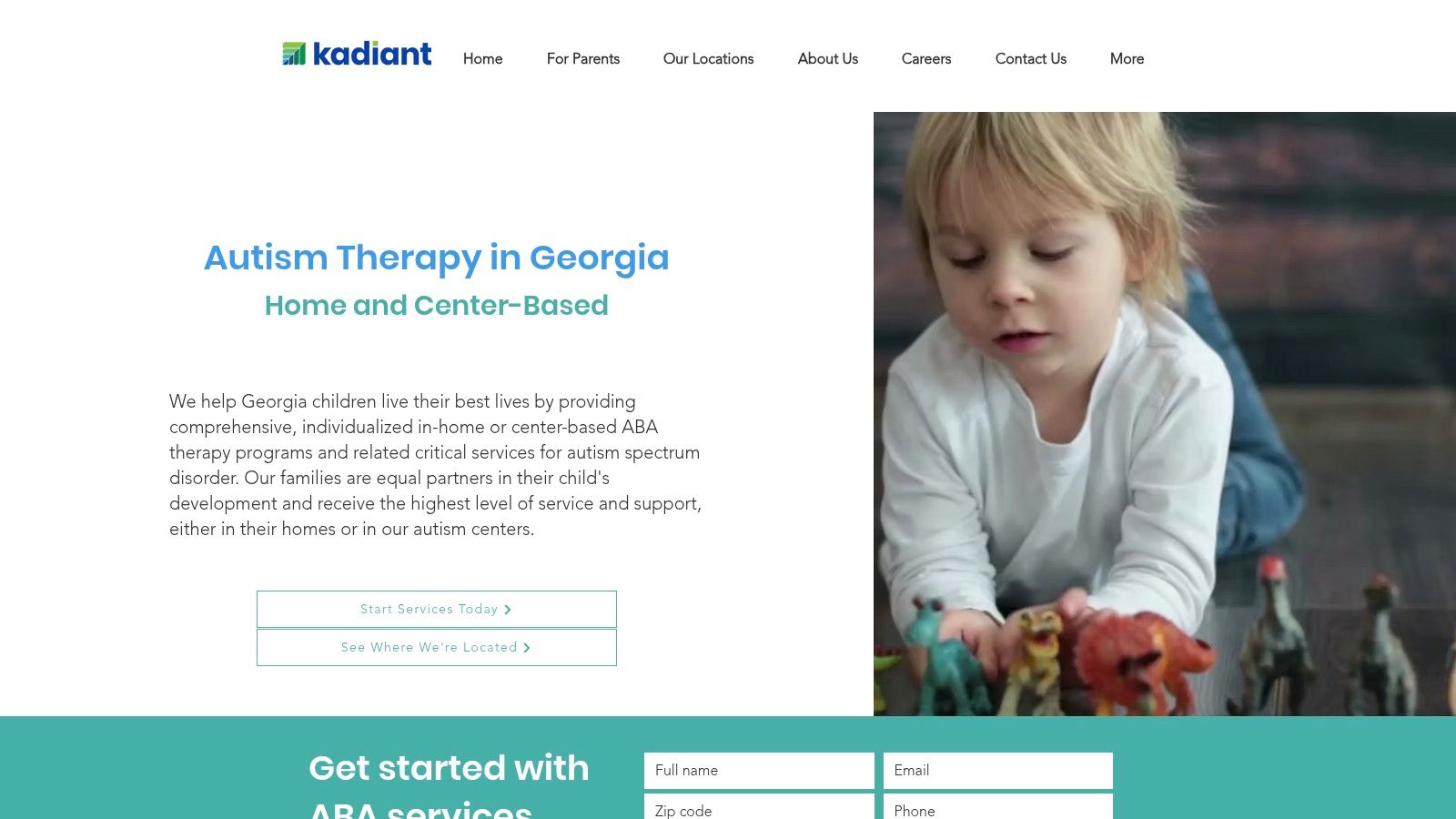
A common Georgia parent question sounds simple but gets complicated fast: do we want therapy at home, in a clinic, or some mix of both? Kadiant stands out because that choice is part of the conversation. The provider offers both center-based and in-home ABA, with service areas in Metro Atlanta and Savannah.
That matters for a practical reason. Some children do better with the structure of a clinic, where routines, materials, and staffing are all in one place. Other children show their biggest needs at home, during meals, dressing, transitions, or play with siblings. A provider that works in both settings may give families more ways to match therapy to everyday life, though the actual option available to you can still vary by location, staffing, and your child's needs.
Kadiant also talks about family training, functional communication, and daily living skills. In plain language, that usually means parents should ask whether goals can include things like asking for help, handling changes in routine, or building skills around toileting, meals, or getting ready for school. For stressed families, that question often matters more than the clinic brochure.
One helpful way to compare Kadiant with other Georgia ABA therapy choices is to treat it like a two-part decision. First, ask whether your area is inside its real service reach, not just the state map. Then ask whether the team can support the setting your child is most likely to use well. Home-based ABA works a bit like hiring a tutor who must come to your house every week. The fit is not only about expertise. It is also about travel range, scheduling, and whether the provider can keep that schedule consistent.
Before you call, write down one daily routine that is hardest right now. That gives the intake team something concrete to respond to.
Try questions like these during a Kadiant call:
- For our ZIP code, are in-home services currently offered or is clinic-based care more realistic?
- Which Georgia area serves us, Metro Atlanta or Savannah, and how far does that team usually travel?
- Can you explain how caregiver training works in real life, such as how often parents join sessions or get coaching?
- If our insurance is accepted, will your staff explain benefit checks, authorizations, and possible out-of-pocket costs before intake?
Website: Kadiant
6. Key Autism Services
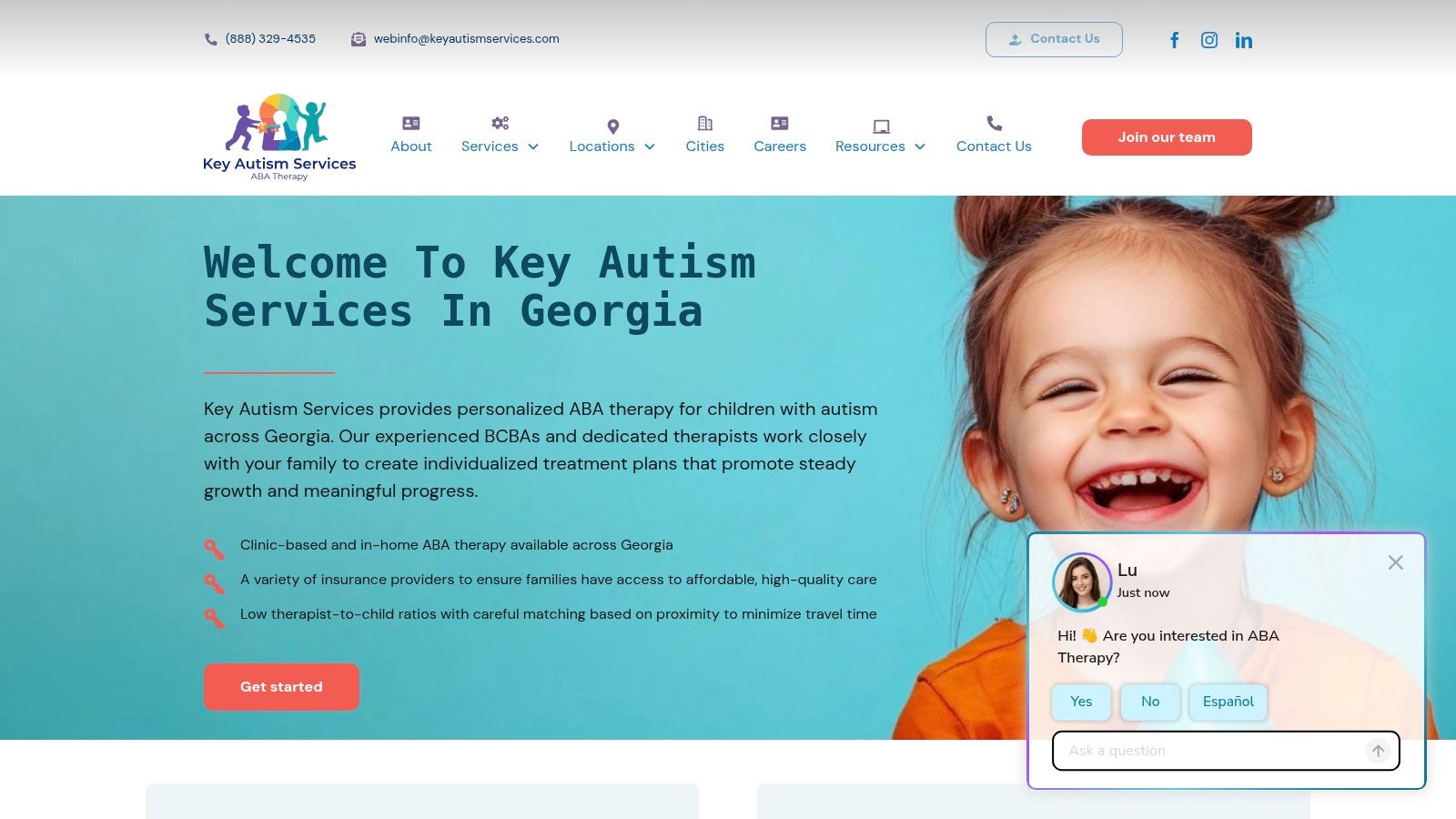
A common Georgia problem looks like this: your insurance may include ABA on paper, but the realistic question is where care can happen and how long the wait may be for your ZIP code. Key Autism Services is one of the providers families often check when they want more than one setting to compare, especially if home-based care is the first choice but a center may end up being the faster or more workable option.
That matters because geography changes the decision. One Georgia-focused guide reports delays of 6 months or longer in metro Atlanta and 12 to 18 months in rural areas, with some counties lacking any in-county provider. That is one source, not a statewide official count, but it reflects a concern many parents run into. The nearest provider on a map is not always the provider that can staff your area now.
Key Autism Services can be useful for families who need to compare settings instead of locking into one model too early. Home-based ABA works a bit like arranging a recurring specialist visit to your house. The provider has to cover your location, match your schedule, and have staff available for that route. Center-based care can widen your options, but it may add drive time and routine changes for your child.
Another point in Key's favor is the practical side of intake. The company describes help with benefits verification and authorization. In plain language, that usually means staff may check whether your plan includes ABA, whether pre-approval is required, and what documents are needed before services can start. It does not tell you what your final costs or start date will be, because those depend on your plan, provider capacity, and location.
A better fit for families comparing setting, distance, and insurance steps at the same time
If you live outside the core Atlanta area, Key may be worth calling because the question is not only "Do you take our insurance?" A better question is "Which form of care is realistic for our county right now?" School coordination and parent training may also matter if your child needs the same goals carried across home, school, and after-school routines.
Keep your first call simple and specific:
- County reality: Do you currently have in-home staff for my county or ZIP code?
- Backup option: If in-home is not available, what is the nearest center-based option families in our area usually consider?
- Insurance process: Before an intake is scheduled, what steps do you take for benefits checks, prior authorization, and explaining likely out-of-pocket costs?
- Parent role: How does caregiver training work in practice, and how often are parents expected to join or follow through between sessions?
Website: Key Autism Services
7. Behavior Frontiers
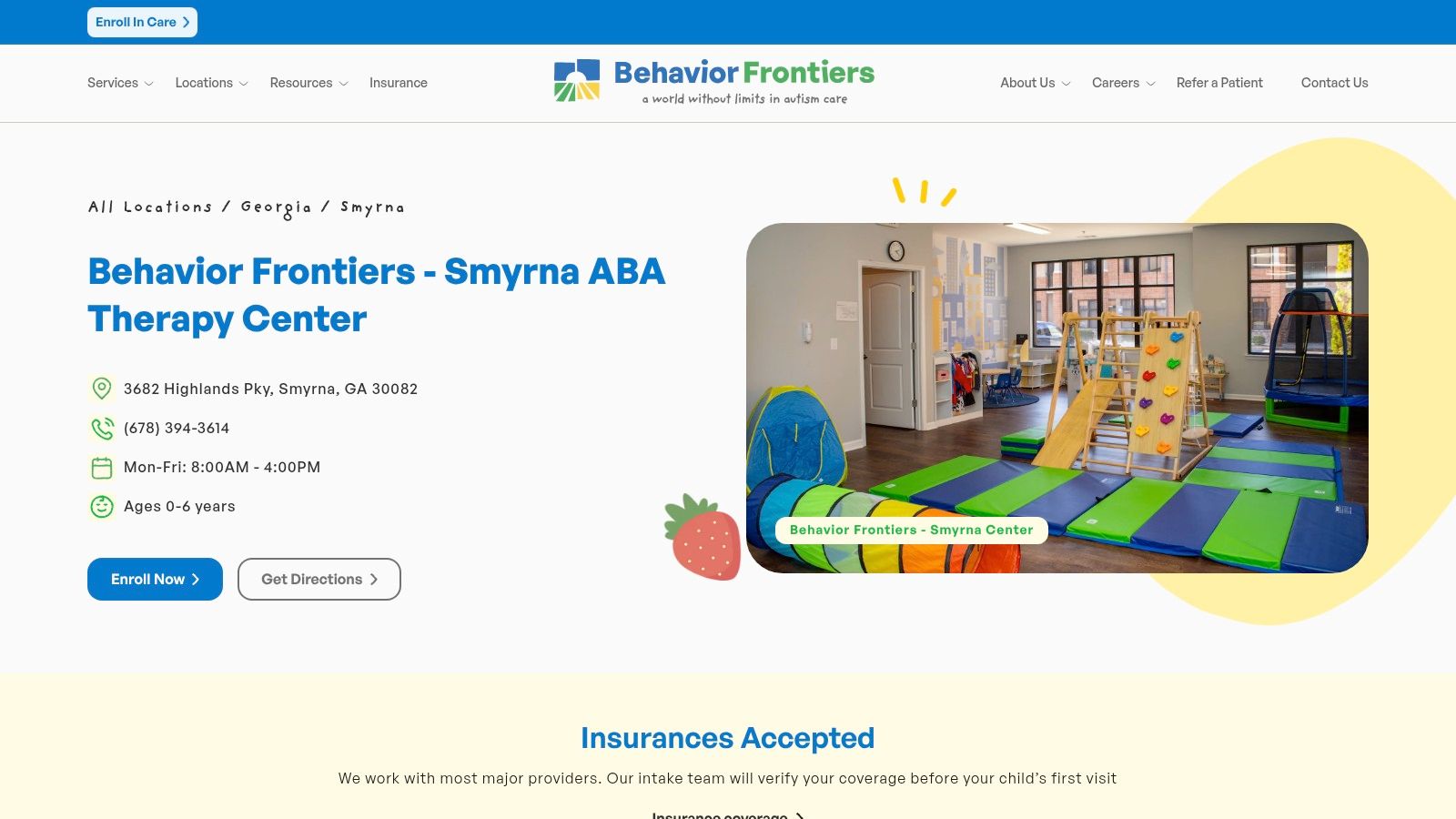
A common Georgia parent question sounds like this: "We can probably drive into Atlanta if we have to, but are we looking at a nearby clinic, a long commute several days a week, or something that only works on paper?" Behavior Frontiers is easier to place on that map than some providers because its Georgia presence is centered on a Smyrna location serving the Greater Atlanta area.
That makes it a clearer comparison point in this guide.
If your shortlist includes statewide groups, hospital-based programs, and smaller Atlanta providers, Behavior Frontiers sits in the middle in one important way. It has the feel of a larger organization with a defined local clinic footprint, but not the broad Georgia reach some families may hope for. For metro Atlanta families, that can simplify the first screening call. For families in Macon, Augusta, Savannah, or more rural counties, it may quickly answer the practical question of whether regular center visits are realistic.
Behavior Frontiers highlights center-based ABA with attention to school-readiness and daily living skills. In day-to-day terms, that usually means goals such as following routines, communicating needs, handling transitions, and building skills that carry into preschool, school, or home routines. It also mentions intake and benefits support, which usually refers to help checking whether ABA is part of your plan and whether authorization steps are needed before care can begin. Final cost, schedule, and start timing still depend on your insurance, the specific clinic, and current staffing.
Instead of asking only whether they accept your insurance, try using the first call to test fit in three areas at once:
- Commute test: For my ZIP code, how many days per week do families usually come to the Smyrna clinic?
- Setting reality: Are current openings mainly center-based, or do you also offer home or hybrid services in my area?
- Child fit: How do you decide whether a child is better matched for clinic-based ABA versus another setting?
- Insurance steps: What happens first after we contact you, benefits check, authorization request, waitlist, or clinical intake?
- Parent expectations: How are caregivers involved between sessions, and what follow-through is expected at home?
Families who are also worried about affordability may want to keep a second track running while they compare providers. One track is clinical fit and distance. The other is payment planning, including what your plan requires, what costs might still fall to you, and whether a separate tool like ABA Finder could help you organize lower-cost options and next-step questions.
Website: Behavior Frontiers
8. Apollo Behavior
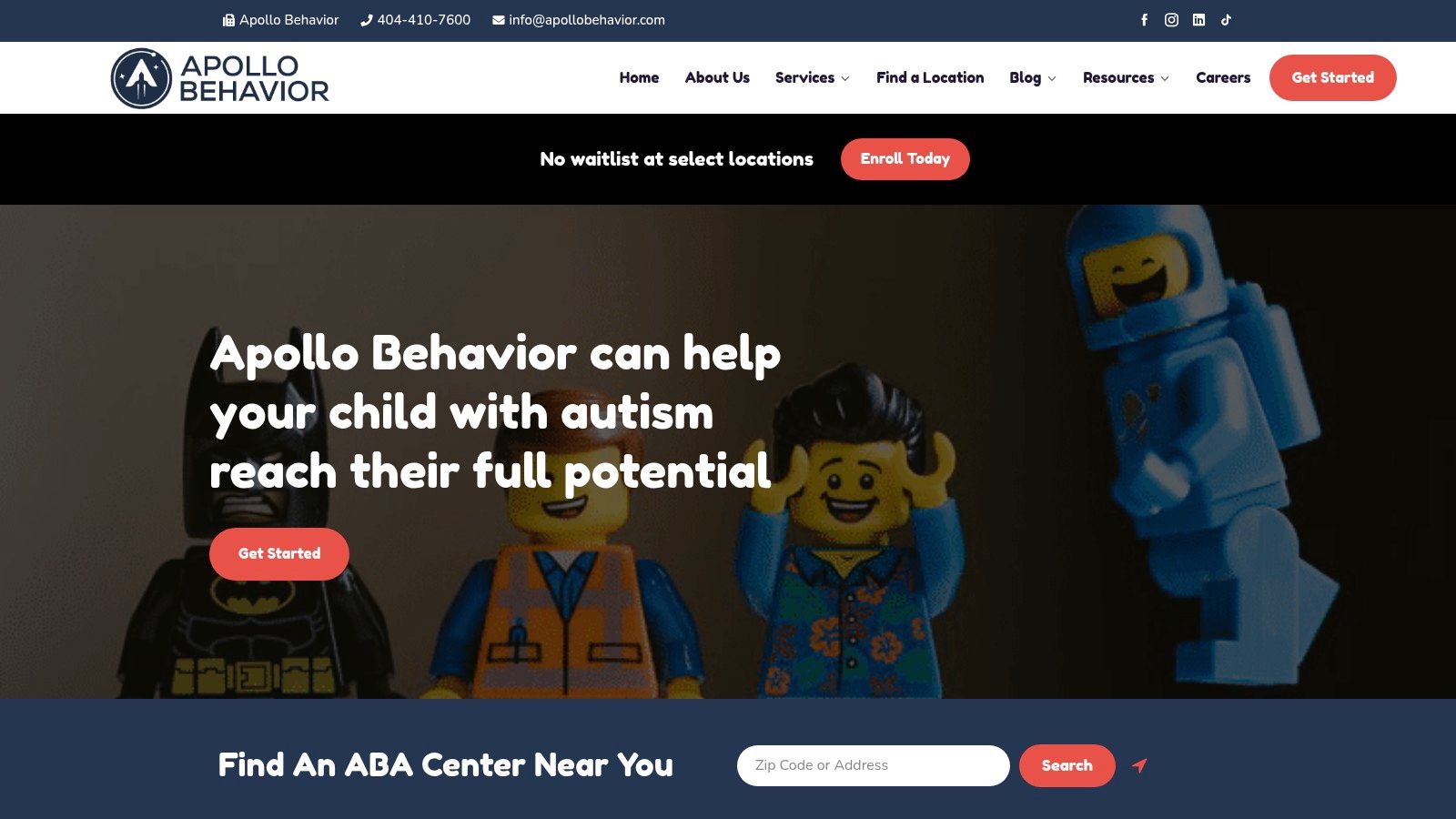
A common metro Atlanta situation goes like this. You want a provider that feels local and easier to read than a giant multi-state company, but you also need to know whether that smaller footprint will limit location choices, scheduling, or insurance fit.
Apollo Behavior may land on that shortlist for exactly that reason. It is Georgia-based, centers its services in the Atlanta area, and presents itself as family-focused. For some parents, that can feel more like choosing a neighborhood practice than entering a large system with many layers.
The tradeoff is practical. A local provider can be easier to understand center by center, but reach is usually narrower. If your home, school, or work routine stretches outside metro Atlanta, Apollo may be harder to use regularly even if the program itself sounds like a good fit.
Apollo highlights center-based ABA for early learners and school-age children, along with BHCOE recognition. Parents often read that kind of recognition as one quality clue, similar to checking whether a school has clear teacher support and consistent classroom routines. It can be useful context, but it does not answer the everyday questions that matter most to families in Georgia, such as commute, session hours, and whether your specific insurance plan is accepted at the location you would use.
A good call with Apollo is less about broad promises and more about narrowing the world fit.
- Service area: Which Atlanta-area centers are currently serving new families from my ZIP code?
- Age and setting: Is your program mainly center-based for younger children, or do school-age children also have consistent scheduling options?
- Insurance process: After I submit my information, do you first verify benefits, request authorization, or schedule an intake?
- Parent role: How often are caregivers expected to participate in training or carry over goals at home?
- Access limits: Are delays usually tied to staffing, insurance approvals, or the specific center?
That last question matters more than it seems. “We're growing” can mean new hiring, future locations, or room for additional families. Those are different answers.
If Apollo interests you, keep two notes side by side while you compare Georgia providers. One is the clinic-fit note: location, age range, and session model. The other is the payment note: what your plan requires before ABA can start, what steps the provider handles for you, and whether you also want a separate affordability path through ABA Finder while you sort through options.
Website: Apollo Behavior
9. Able Kids
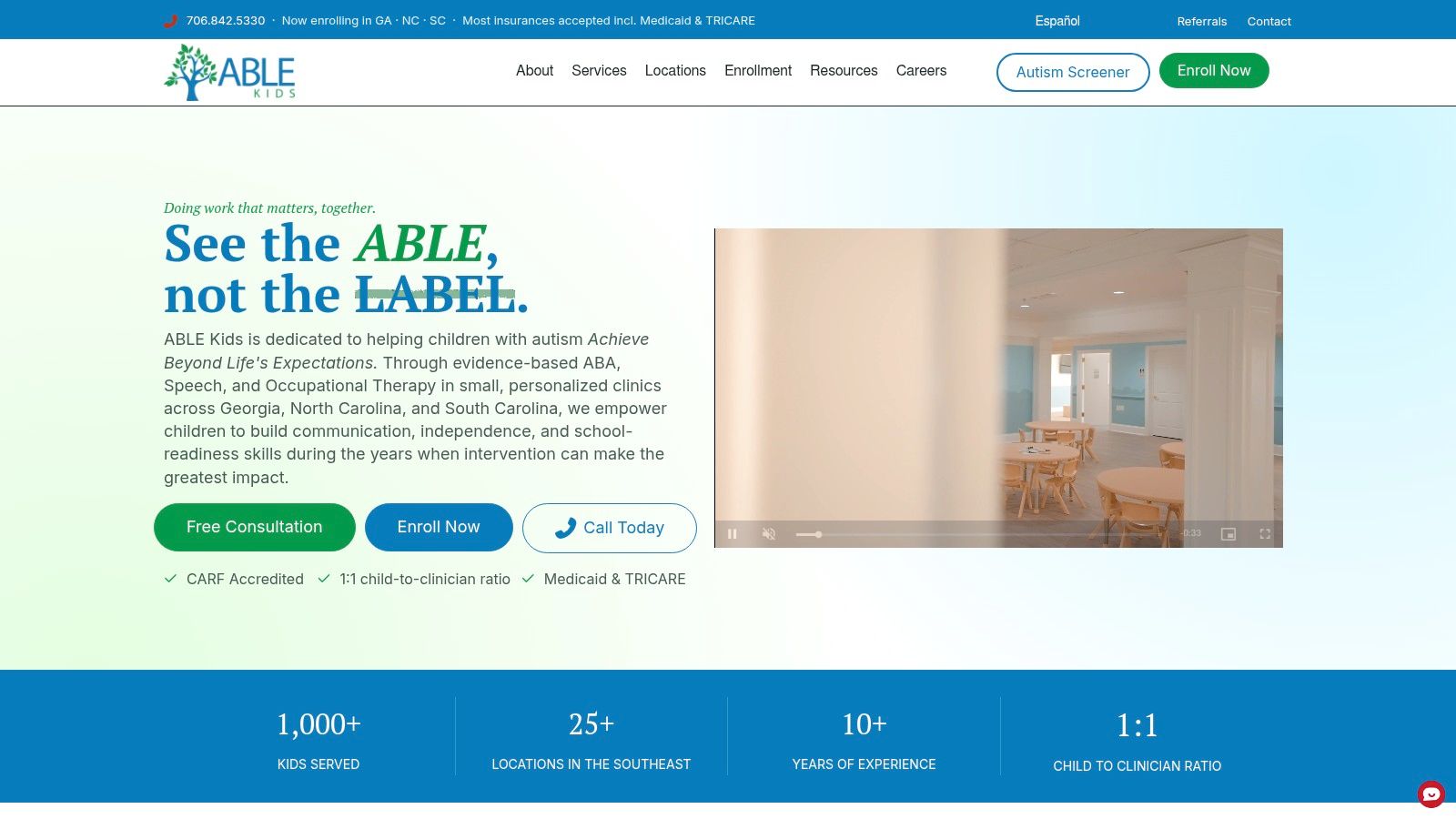
A common Georgia parent problem sounds simple until you live it. Your child may need ABA, speech, and occupational therapy, but each service can come with separate schedules, separate paperwork, and separate teams who do not always share the same daily goals.
Able Kids stands out if you want to ask a very practical question first: can more than one therapy happen under one roof? For some families, that setup works like keeping your child's care in one notebook instead of three. It may make handoffs easier and reduce the time spent repeating the same concerns to different offices.
That said, “all in one place” can mean different things by clinic. One location may coordinate closely across disciplines, while another may offer the services but schedule them more independently. In Georgia, that difference matters just as much as the service list itself.
Instead of treating Able Kids as a yes-or-no option, it helps to compare it on two tracks at once.
First, the clinic-fit track. If your child is younger and you are focused on early intervention, school readiness, or combining therapies, Able Kids may belong on your shortlist. Smaller clinics can feel calmer for some children, and some parents prefer a setting where the team may feel easier to get to know.
Second, the access-and-payment track. Before you spend too much time on intake forms, ask how that specific Georgia clinic handles referrals, benefit checks, and any outside diagnostic paperwork. ABA often starts only after several pieces line up, such as an autism diagnosis, insurance review, and scheduling capacity. The order can differ by provider and plan.
A short call can clear up a lot:
- Can ABA, speech, and occupational therapy be scheduled through the same clinic for my child?
- How do the therapists share goals or updates across services?
- Do you require an outside autism evaluation before ABA intake begins?
- Which Georgia locations offer the mix of services my child needs?
- What happens first after I contact you: referral review, benefits check, intake, or waitlist discussion?
Families comparing Georgia ABA therapy providers often focus on the headline service and miss the day-to-day fit. With Able Kids, the comparison point is whether a smaller multidisciplinary clinic matches your child's needs better than a larger ABA-only network, and whether the steps to start are realistic for your location and insurance plan.
Website: Able Kids
10. Appleseeds Behavioral Center
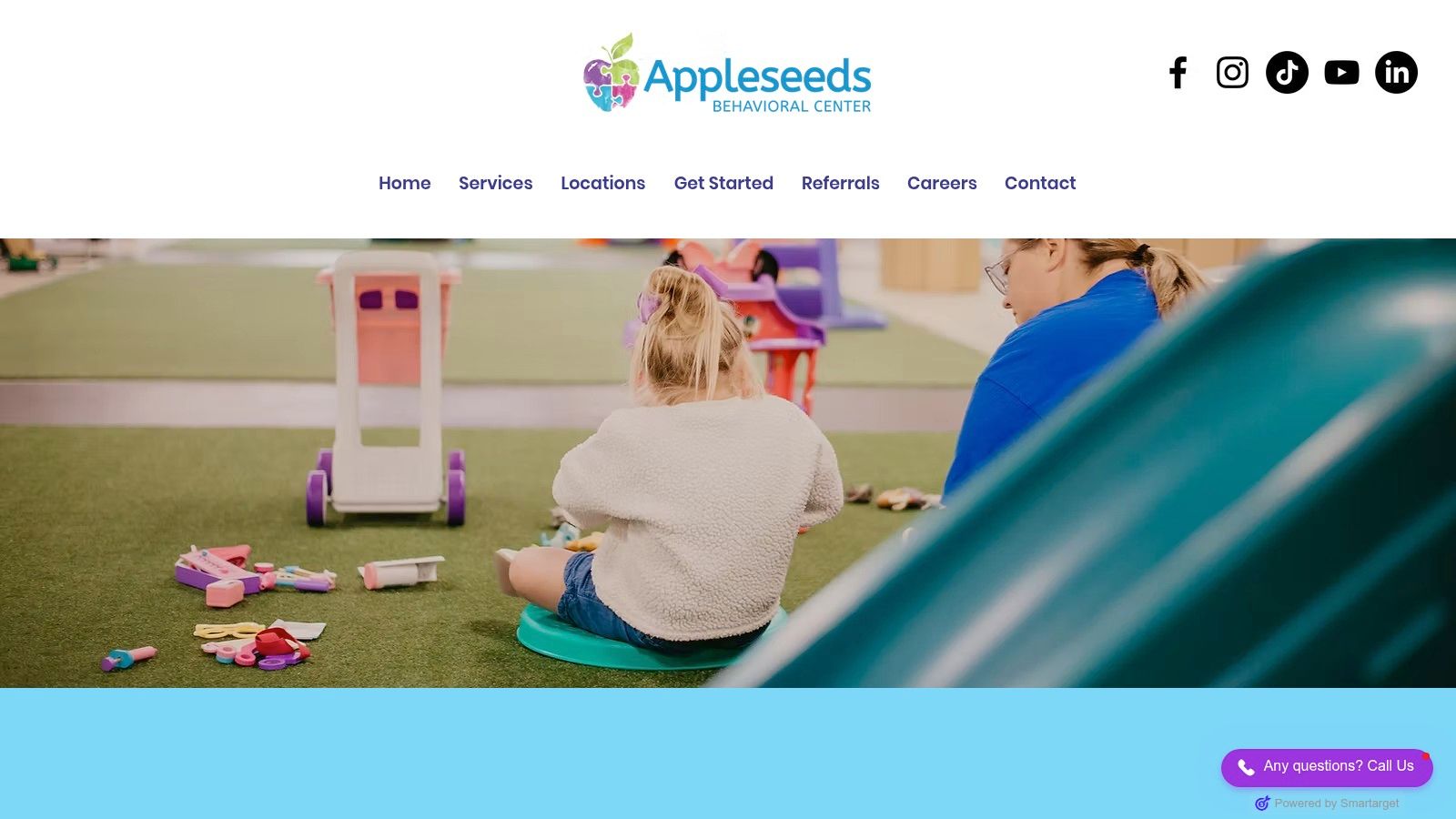
Your child is school-age, you want a provider based in Georgia, and you need to know early whether the clinic even serves your child's age group. Appleseeds Behavioral Center stands out for being more direct than many providers about that first screen. Its stated range of roughly 18 months through 15 years gives families a fast way to decide whether to keep reading or make a call.
That may sound like a small detail. For parents comparing Georgia ABA therapy options, it can save time the same way a shoe store saves time by posting sizes before you get to the checkout line. If your child is older than that stated range, you may need to put this provider in the "ask first" category rather than assuming fit.
Appleseeds may appeal to families who want a Georgia-based clinic instead of a large multistate brand. The practice highlights individualized ABA, caregiver training, school collaboration, and BHCOE accreditation. In practical terms, that suggests a provider trying to build treatment around the child's daily routines, not just around clinic hours.
The comparison point here is less about brand size and more about match. A smaller or more local-feeling provider can be appealing, but geographic reach may be narrower than what you would see from a larger network. That matters if you are balancing commute time, school schedules, or the possibility that availability differs by clinic.
Before you spend too much energy on paperwork, use your first call to sort Appleseeds into the right lane:
- Does my child's current age and support needs fit the programs offered at this location?
- Is therapy mainly center-based, home-based, or a mix, and does that differ across Georgia service areas?
- How does your team work with schools or outside therapists if my child already has services elsewhere?
- What paperwork usually comes first for this clinic, such as diagnosis records, referral details, or an insurance review?
- If this location is not a fit, what should I ask next about other Georgia ABA options or lower-cost search support?
If cost or plan rules are still unclear, keep Appleseeds on one track and affordability research on another. Some families compare providers directly, then use ABA Finder separately to sort out insurance questions, out-of-network concerns, and other budget-related next steps without assuming every clinic handles payment the same way.
Website: Appleseeds Behavioral Center
Top 10 Georgia ABA Therapy Providers: Comparison
| Provider | Core features | Coverage & access | Cost / value | Best for / Target audience | Standout / USP |
|---|---|---|---|---|---|
| ABA Finder 🏆 | Secure intake & needs assessment; insurance & out‑of‑network review; provider introductions; affordability guidance | CT, FL, GA, MD, MA, NJ, NY, NC, SC, VA, WA, location-based options; capacity varies | 💰 Free guidance; no referral fee; cannot guarantee placement/funding | 👥 Parents/caregivers, pediatricians, school staff seeking cost navigation & referrals | ✨ Streamlined single-conversation cost + provider navigation; privacy-conscious, ★★★★ |
| Hopebridge Autism Centers | Center-based ABA; in-house diagnostics; OT & ST; family training | Multiple GA metro centers; broad statewide footprint; possible waitlists | 💰 Insurance-based; potential OOP; center fees vary | 👥 Families wanting integrated clinic-based evaluation→treatment | ✨ One-stop pathway & interdisciplinary teams, ★★★★ |
| Marcus Autism Center (Children's Healthcare of Atlanta) | ABA programs for severe behavior/feeding; multidisciplinary clinics; research & training | Hospital-affiliated (Atlanta); specialized programs; limited capacity | 💰 Insurance varies; some services may be OON; program-dependent costs | 👥 Children with complex/severe needs; families seeking specialty care | ✨ Hospital-based specialty + research hub; extensive family & school consultation, ★★★★★ |
| BlueSprig Autism | Center-based ABA; caregiver training; benefits verification; standardized processes | Many GA centers; online locator; network transferability | 💰 Insurance-assisted; verify benefits; OOP varies by plan | 👥 Families wanting consistent care across a large network | ✨ Standardized clinical processes & onsite benefits support, ★★★★ |
| Kadiant | Center- and in‑home ABA; individualized plans; family training; focus on functional skills | Metro Atlanta & Savannah regions | 💰 Insurance-based; verify clinician capacity & authorizations | 👥 Families needing flexible home or center delivery | ✨ Flexible home+center model; focus on daily-living & communication, ★★★★ |
| Key Autism Services | In‑home & center ABA; parent training; school coordination; centralized benefits support | Multiple GA locations; many counties offer in‑home options | 💰 Insurance + authorization support; pricing varies | 👥 Families preferring in‑home starts or broad geographic reach | ✨ Centralized benefits verification + in‑home availability, ★★★★ |
| Behavior Frontiers | Evidence-based center programs; school-readiness; intake & benefits guidance | Smyrna (Greater Atlanta) center; backed by national infrastructure | 💰 Insurance-based; site capacity may be limited | 👥 Families near Atlanta seeking standardized clinical quality | ✨ National infrastructure with standardized clinical quality, ★★★★ |
| Apollo Behavior | Center-based ABA; clinical mentorship; family-centered care; BHCOE recognition | Metro Atlanta expansion; limited sites outside Atlanta | 💰 Insurance-dependent; growing capacity with active hiring | 👥 Families seeking BHCOE-recognized local provider | ✨ BHCOE recognition + focused clinical mentorship, ★★★ |
| Able Kids | ABA with integrated OT & ST in small child-friendly clinics | Regional GA network incl. Augusta; fewer locations statewide | 💰 Insurance-based; multidisciplinary billing may vary | 👥 Families wanting ABA co-located with OT/ST in a smaller clinic | ✨ Multidisciplinary therapy under one roof; personalized clinics, ★★★ |
| Appleseeds Behavioral Center | BHCOE-accredited ABA; caregiver training; school collaboration; ages ~18m–15y | Georgia-focused practice; limited site locations | 💰 Insurance + authorization; verify OOP exposure | 👥 Families of early learners to mid-teens seeking accredited local care | ✨ BHCOE accreditation; clear age-range focus, ★★★★ |
Turn a Shortlist Into a Practical Next Step
Once you've got a few names, the next step isn't choosing the “best” Georgia ABA therapy provider on paper. It's finding the best practical fit for your child, your schedule, your location, and your payment situation. That usually means making a few direct calls and asking focused questions.
Start with geography. Ask each provider whether they serve your exact area, not just your city name. In Georgia, travel distance and staffing can make a big difference, especially outside major metro regions. If you want in-home care, confirm that they offer it in your ZIP code right now, not just somewhere in the state.
Then ask about setting. Some children do well in a center where routines are structured and distractions are limited. Others may benefit from support in the home, where daily routines naturally happen. Neither option is automatically better. What matters is what's available, sustainable, and appropriate for your family.
A few payment details are worth checking early because they can change your options. Georgia's autism insurance mandate, often called Ava's Law, was enacted in 2015 under Georgia law, and Georgia sources commonly cite an annual ABA benefit cap of $35,000 per year for qualifying covered children under many state-regulated plans. Some legislative summaries also note a 1% premium-impact threshold tied to possible insurer exemption. The practical takeaway is simple. Private insurance rules can vary by plan type, and not every employer plan follows the same Georgia mandate framework.
Medicaid is another possible route for some families. Georgia Medicaid added ABA coverage for children under 21 through EPSDT beginning January 1, 2018. A Georgia Medicaid policy also says the member must be under 21, able to participate in sessions, and have behaviors that create clinically significant health or safety risks or substantially interfere with self-care, communication, or social skills, according to CareSource's Georgia Medicaid ABA policy. Families sometimes assume a waiver is required, but Georgia Medicaid materials state that ABA and other autism spectrum disorder services don't require a NOW or COMP waiver.
Another important detail is plan type. Georgia-focused coverage discussions note that self-funded employer plans may fall outside the state mandate framework, which is why two families with seemingly similar insurance can run into very different authorization rules. If your child has coverage through a job-based plan, ask whether it's fully insured or self-funded before assuming state autism mandate rules apply.
If a provider says they're out-of-network, don't assume that automatically ends the conversation. Ask whether your plan offers any out-of-network reimbursement, whether the provider helps with claims paperwork, and whether there are payment arrangements or financial assistance options worth reviewing. Those pathways depend on the provider, your policy, your eligibility, and current program rules, so it's best to confirm details directly with both the provider and your insurer.
One last note for Georgia families. A lot of stress comes from thinking coverage should solve everything. Sometimes it doesn't. Access may still depend on waitlists, staffing, location, and authorization processes. If you want help narrowing your shortlist and understanding likely payment routes without committing to a provider, ABA Finder can be a useful first step.
If you want help sorting through Georgia ABA therapy options, ABA Finder can walk you through provider possibilities, insurance questions, and out-of-network paths in plain language. It's a no-obligation starting point for families who need clarity before making more calls. You can learn more or get started at ABA Finder.
Our Latest Insights






Every Child Deserves Access To Quality ABA Therapy
Whether you're searching for providers, exploring financial assistance, or trying to better understand your insurance options, we're here to help you take the next step with confidence.