



6 Examples of Continuous Reinforcement in ABA Therapy
Explore clear examples of continuous reinforcement in everyday routines and ABA therapy, with plain-language notes on when it is used and why.

A toddler reaches for a ball, tries a new sound, and looks toward you. You smile, say “Ball!”, and hand it over right away. That simple exchange is one of many examples of continuous reinforcement in everyday life. The child makes the target response, and the meaningful consequence follows each time.
In Applied Behavior Analysis (ABA), a therapy approach that uses learning principles to build skills, reinforcement means something that makes a behavior more likely to happen again. Continuous reinforcement means the reinforcer follows every correct response, rather than only some responses. Because the connection is repeated and easy to notice, this approach can be especially helpful when a child is just beginning to learn a skill.
The examples below are general educational information, not medical advice. Your child's Board Certified Behavior Analyst (BCBA), speech-language pathologist, pediatrician, or other qualified provider can help you decide what fits your child, family, and routine.
Table of Contents
1. Immediate Praise for Every Attempt at a New Word
A new word often begins with an approximation, such as “ba” for “ball.” If your child makes that attempt, you can respond warmly and immediately by saying, “Yes, ball!” with a smile, then handing over the ball. Each successful attempt receives the same clear response.
In ABA, the response might be a spoken word, a sound, a gesture, or another agreed-upon communication behavior. The reinforcer could be praise, access to the requested toy, a short activity, or another consequence your child enjoys. The point isn't to offer a large prize. It's to make the connection between communication and a useful outcome easy to understand.
Practical rule: Keep the reward close to the response. A prompt response helps your child connect the sound or gesture with what happened next.
A toddler who says “up” might be lifted onto the couch while you say, “Up! Great asking!” A child who points toward a cup might receive water right away, along with specific praise such as, “You asked for water.”
Making early communication feel successful
Use words and activities your child already wants. If your child loves bubbles, cars, music, or a favorite ball, those interests can make communication practice feel natural instead of like a drill. Early on, your child's provider may recommend reinforcing close approximations, then gradually expecting clearer sounds or more complete requests.
The Texas Autism Research and Resource Center recommends immediate reinforcement for a learner who is first learning a target behavior, along with specific praise and small amounts of a preferred reinforcer. You can read its guidance on using reinforcement in autism support.
Ask your BCBA or speech-language pathologist how long to reinforce every attempt, which approximations to accept, and how to respond if your child loses interest. Those decisions should be individualized rather than based on a universal word list or reward schedule.
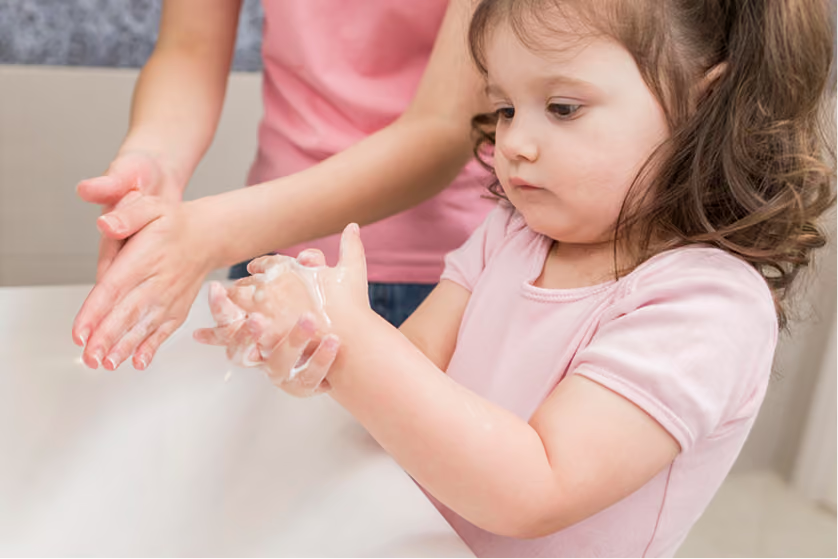
2. Praise and a High-Five for Each Step of Handwashing
Handwashing contains several small actions. A child may need to turn on the faucet, wet their hands, use soap, rub their hands, rinse, and turn off the water. If you praise each completed step and offer a high-five, your child receives immediate feedback throughout the routine.
This is an example of continuous reinforcement applied to a daily living skill. Daily living skills are self-care activities that support independence, such as washing hands, getting dressed, eating, and using the bathroom. Breaking a routine into manageable steps can make it less confusing, especially when the child knows what comes next.
A picture strip near the sink can show the sequence. You might point to each image and use brief comments such as “Water on, good job!” or “Soap on, great!” Specific praise tells your child exactly what they did successfully.
Families may also use the same approach for dressing. A child puts one arm into a jacket sleeve, and the parent gives a thumbs-up. The child puts in the second arm, and the parent offers another brief celebration.
Supporting independence without pressure
A visual routine, short praise, and a calm tone can help keep the task predictable. On some days, a child may need more help because of tiredness, sensory discomfort, or a change in the environment. That doesn't erase previous progress.
For practical ideas about helping a child participate in home routines, see supporting your child's independence at home.
Once a step is steady, the child's therapist may suggest rewarding only some completed steps while continuing to acknowledge the whole routine. Ask when that change makes sense, whether praise should continue even when tangible rewards are reduced, and how to respond when handwashing becomes harder at school or in public.
3. Rewarding Each Correct Imitation During Early Speech Practice
A parent holds up a toy car and says, “Car.” The child responds, “Ca,” or perhaps says the full word. The parent immediately says, “Car! Yes!” and lets the child push the car. That quick sequence turns imitation into a meaningful, playful exchange.
Imitation means copying a sound, word, movement, or action. It can support communication and social learning, but children may begin with partial attempts. Reinforcing an approximation can help keep practice encouraging while the child develops greater accuracy.
You can use the same idea during a bubble activity. If your child copies “blow,” you blow bubbles right away. The bubbles are connected directly to the communication attempt, while your praise adds social encouragement.
Keep practice playful
Short activities often fit more easily into family life than long practice sessions. Choose one or two target words, use an item your child already wants, and stop while your child is still engaged. The reward can be the activity itself, such as pushing a car, hearing a favorite song, or watching bubbles float.
Pairing praise with the preferred item can help your child notice both the social response and the natural outcome. For example, “You said car. Push the car!” keeps the language connected to the activity rather than turning every exchange into a separate prize ceremony.
Share observations with your child's speech-language pathologist or BCBA. Ask whether partial sounds should count as successful attempts, how to model the word without adding pressure, and when to begin expecting a clearer approximation. A provider can also help you distinguish speech practice from a situation where your child is communicating successfully in another way, such as pointing or using a picture.
4. A Bite of a Favorite Food for Each Scoop of the Spoon
At mealtime, a child scoops yogurt and brings the spoon toward their mouth. The parent immediately offers a tiny piece of a preferred fruit, along with calm praise. Because the consequence follows each successful scoop, the child can begin to connect using the spoon with a positive result.
This approach can be used while building a feeding or self-care skill, but mealtimes need special care. Food preferences, sensory responses, allergies, swallowing concerns, and medical needs vary widely. A pediatrician or feeding therapist should guide changes to diet, textures, portions, and food-based rewards.
A child learning to eat cereal with a spoon might receive specific praise such as, “You kept the spoon steady,” followed by a small preferred snack. The reward doesn't have to be food. A sticker, a brief turn with a favorite toy, a song, or another child-selected activity may fit better.
A reinforcer should support learning without making the meal feel like a struggle or a transaction.
Keep the routine calm and manageable
Small portions can help the child stay focused on the skill rather than becoming full quickly. Keep the language brief, offer help when needed, and avoid treating accidents or spills as failures. The purpose is to support participation and independence, not to create pressure around eating.
You may find ideas for embedding learning into ordinary activities in naturalistic ABA therapy. Your provider can help identify a meaningful reinforcer through observation and choice rather than assuming every child will work for the same snack or prize.
As spoon use becomes more consistent, ask the feeding therapist or BCBA how to reduce food rewards gradually and increase natural consequences, such as enjoying the meal or completing a preferred activity. Families shouldn't make abrupt changes to feeding plans without professional guidance.

5. Using a Picture Card to Ask for a Preferred Item
A child hands a parent a picture of bubbles. The parent opens the bubble bottle immediately. The child gives a picture of a banana, and the parent offers a banana slice right away. Each exchange teaches the same clear message: using this communication method helps the child access what they're requesting.
The Picture Exchange Communication System, often called PECS, is a structured communication approach used in some ABA and speech-language programs. In a simple exchange, the child gives a picture card to another person in return for the selected item or activity. Continuous reinforcement can make that exchange easier to understand during early teaching.
The picture should represent something your child wants at that moment. A card for bubbles won't be motivating if your child is finished with bubbles. Preference can change with time, setting, hunger, tiredness, and what the child has already had access to.
Make the first exchanges easy to notice
Keep one or two high-interest cards visible and reachable. Respond promptly after the exchange, so the child sees that the card produced the result. Avoid placing cards where your child can't access them independently unless a provider has designed a specific teaching arrangement.
You can find more ideas for communication in everyday moments that build communication skills. Ask your speech-language pathologist or BCBA to show you how to present cards, support an exchange, and adjust the system as communication develops.
A structured approach matters because PECS is more than handing a child a picture board and hoping they use it. Ask who will train caregivers, how to handle a card for an unavailable item, and when spoken words, gestures, signs, or a speech-generating device should be included. The right communication system should respect your child's preferences and make it easier for them to express needs.
6. Praise and a Small Treat for Each Successful Toilet Trip
A child sits on the toilet after a snack and successfully uses it. The parent responds with immediate praise and a small sticker. Another child tells a parent they need to go, walks to the bathroom, and receives praise plus a small preferred snack. These are examples of continuous reinforcement during early toileting, when a clear and predictable response can make the routine easier to understand.
Toileting can bring strong emotions for children and caregivers. Keep the routine calm, use simple language, and avoid shame after accidents. A visual schedule may show walking to the bathroom, lowering clothing, sitting, using the toilet, wiping, flushing, and washing hands.
The target behavior should be defined clearly with your child's provider. For one child, the first target might be sitting calmly. For another, it might be communicating the need to go, walking to the bathroom, or completing a specific part of the routine.
Keep rewards brief and predictable
A sticker, a short song, praise, or a small snack may be meaningful, depending on the child. The reward should be quick enough that the child can return to the routine. If your child has bladder, bowel, pain, constipation, or other health concerns, speak with your pediatrician before changing toileting practices.
As the routine becomes steadier, many families begin to reduce rewards gradually rather than stopping them suddenly. Ask your BCBA or pediatrician when that transition may be appropriate, which successes should continue to receive reinforcement, and how to handle accidents without making the child anxious.
The same questions apply when the child uses the toilet in a different place, such as school, a relative's home, or a public restroom. A plan that works only in one bathroom may need additional practice across people and settings.
6-Example Comparison of Continuous Reinforcement
| Strategy | Implementation complexity 🔄 | Resource requirements ⚡ | Expected outcomes 📊 | Effectiveness ⭐ | Ideal use cases 💡 |
|---|---|---|---|---|---|
| Immediate Praise for Every Attempt at a New Word | Low, simple delivery but requires moment-to-moment attention 🔄 | Low, no materials, high caregiver availability ⚡ | Rapid association of attempt → reward; increased early vocalizations 📊 | ⭐⭐⭐⭐ | Early word teaching; natural home routines 💡 |
| Praise and a High-Five for Each Step of Handwashing | Low, needs task analysis and prompting 🔄 | Low, no special materials, repeatable across day ⚡ | Clear step-by-step feedback; improved routine completion 📊 | ⭐⭐⭐⭐ | Teaching multi-step ADLs (handwashing, dressing) 💡 |
| Rewarding Each Correct Imitation During Early Speech Practice | Medium, structured short sessions and modeling 🔄 | Low–Moderate, time for sessions; caregiver/therapist coaching ⚡ | Better imitation skills that support speech and social learning 📊 | ⭐⭐⭐⭐ | Short practice/play sessions; therapy or home practice 💡 |
| A Bite of a Favorite Food for Each Scoop of the Spoon | Medium, requires feeding plan, portion control, collaboration 🔄 | Moderate, preferred foods, therapist input, supervision ⚡ | Faster acquisition of spooning and self-feeding skills 📊 | ⭐⭐⭐⭐ | Mealtime skill-building with feeding/OT support 💡 |
| Using a Picture Card to Ask for a Preferred Item (PECS) | Medium, setup and teaching exchange routine 🔄 | Moderate, cards, training, consistent use by caregivers ⚡ | Reliable nonverbal communication; reduced frustration 📊 | ⭐⭐⭐⭐⭐ | Children with limited speech across home, school, clinics 💡 |
| Praise and a Small Treat for Each Successful Toilet Trip | Medium, scheduling, visual supports, consistent routine 🔄 | Low–Moderate, small rewards, timers, caregiver effort ⚡ | Clear link between toileting and reward; faster routine formation 📊 | ⭐⭐⭐⭐ | Toilet-training initiation; children responsive to quick rewards 💡 |
Turning Examples Into a Plan for Your Family
Across these examples of continuous reinforcement, the same pattern appears: your child makes a clearly defined response, and a meaningful consequence follows promptly. That response might be a sound, a word, a picture exchange, a handwashing step, a spoon movement, or a toileting routine. The consequence could be praise, access to a preferred activity, help, a break, a sticker, or another option your child has chosen.
Timing matters. A reward delivered within a few seconds is easier to connect with the behavior than one offered much later. The reward also doesn't need to be expensive or large. A favorite song, movement break, attention, help with a difficult task, or access to a toy may be more practical and more respectful of your child's preferences than a standard prize list.
Continuous reinforcement is often a starting point, not a permanent requirement. OpenStax describes reinforcement after every response as especially useful for teaching a new behavior, while also noting that a behavior can decline quickly if the expected reward suddenly disappears. You can review its explanation of operant conditioning and reinforcement schedules.
When a skill becomes reliable, your child's BCBA or therapist may recommend schedule thinning, which means gradually providing reinforcement less often. The team should watch your child's progress at each change and adjust if the skill weakens, frustration increases, or the behavior appears only in one setting. Don't stop a reinforcer abruptly just because the skill looks stronger at home.
Coverage and payment are separate questions from the teaching plan. ABA coverage may vary by private insurance plan and state. Medicaid programs may offer another path, depending on eligibility and state rules. Some families also explore out-of-network benefits, which may allow reimbursement for care from a provider who doesn't have a contract with the plan, subject to plan rules and documentation.
No provider acceptance, insurance payment, financial assistance, or treatment outcome can be guaranteed. Ask your insurer whether ABA or related services are covered, whether prior authorization is required, what in-network and out-of-network options mean, and which documents your provider must submit. Your BCBA, speech-language pathologist, pediatrician, or insurer can explain the parts that apply to your child.
If you'd like help finding a provider or understanding your options, ABA Finder is available to talk whenever you're ready.
ABA Finder helps families explore recommended ABA therapy providers and understand possible payment paths, including insurance review, out-of-network benefits, and affordability resources where available. Visit ABA Finder to share your needs and learn about potential next steps without making a commitment.
Our Latest Insights



















Every Child Deserves Access To Quality ABA Therapy
Whether you're searching for providers, exploring financial assistance, or trying to better understand your insurance options, we're here to help you take the next step with confidence.