



Autism Early Intervention Guide for Parents and Caregivers
Learn what autism early intervention is, when to start, how IDEA Part C works, and how to find services and explore payment options.

You notice the small things first. Your child doesn't point like other toddlers, or the words you expected just aren't coming, or a teacher says they seem to miss social cues, and now you're staring at a search results page trying to figure out what to do next. That moment is exhausting, because you're not only worried about development, you're also trying to understand diagnoses, early intervention, insurance, and school systems all at once.
Autism early intervention is the umbrella term for supports that help a young child build everyday skills sooner rather than later. It is not about fixing a child, and it's not a promise that one service will solve everything. It's about giving families a clearer path to communication, routines, play, and independence, while the system around them is still catching up.
The hardest part for many parents isn't the therapy itself. It's the gap between the first concern and the first real service. This guide follows that path step by step, from what early intervention means in plain language to how families may keep momentum while waiting, how IDEA Part C and school-based services fit in, and what payment options may help depending on your plan or state.
Table of Contents
- Introduction to Autism Early Intervention for Worried Parents
- What it often looks like day to day
- What families should expect from the process
Introduction to Autism Early Intervention for Worried Parents
A lot of families begin in the same place. One parent notices their child doesn't respond to their name, another hears “let's wait and see,” and a third gets a referral that leads nowhere for weeks. In that stretch of uncertainty, it's easy to feel guilty for even asking questions.
That feeling makes sense, but concern is not overreacting. Early support exists for children who need help with communication, movement, play, and daily routines, and families do not have to wait for everything to feel certain before asking for an evaluation or services. The CDC says early intervention services can greatly improve a child's development and are intended for children from birth to age 3, including help with talking, walking, and interacting with others (CDC early intervention services).
Practical rule: if your child's development worries you, write it down, bring it up, and keep the conversation moving.
Parents often ask whether starting early means making a lifelong commitment to one therapy or one label. It doesn't. Early intervention is more like opening a set of doors, then figuring out which ones fit your child best based on their needs, your schedule, and what your local system can provide. That may include public early intervention, school services, or ABA and other therapies depending on eligibility and access.
The sections below stay focused on practical next steps, because families usually don't need more buzzwords. They need a calm map, a few plain-language definitions, and a realistic sense of what can happen while they wait for answers. They also need to know that they can ask questions of their provider, insurer, or local public program without having to be an expert first.
What Early Intervention Services Are and How They Help
A child may have trouble asking for help, joining play, handling a change, or completing a daily routine. Early intervention services turn those concerns into specific goals that providers and caregivers can practice together. Support may include communication, play, movement, social interaction, regulation, and everyday skills.
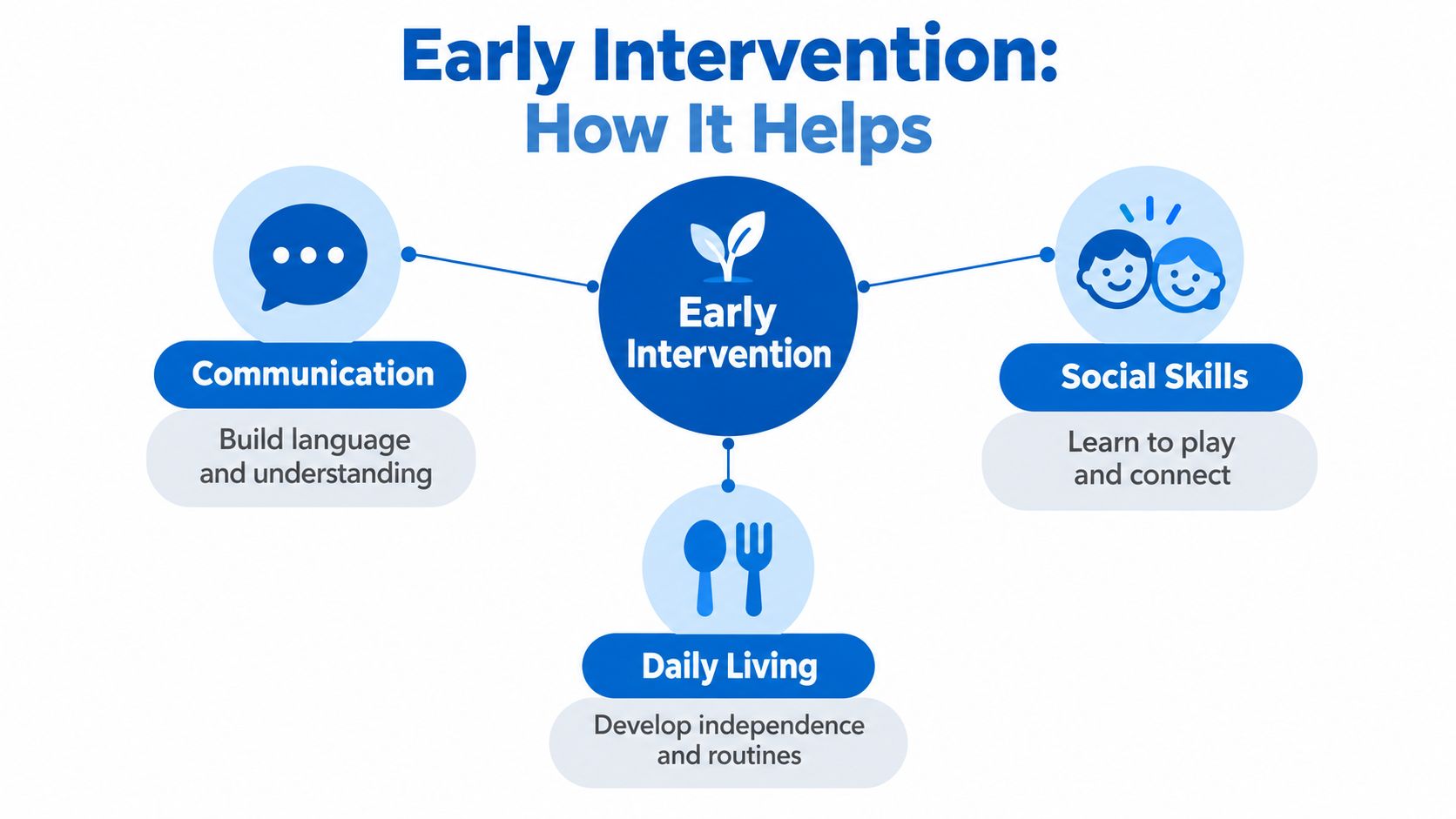
Services may take place at home, in a clinic, through an early intervention program, or in a school setting. The location depends on your child's age, eligibility, local availability, and the plan created with your provider or public program. The team might include speech and language professionals, developmental specialists, occupational therapists, or behavior therapists.
Families may also hear ABA, short for Applied Behavior Analysis. It is a structured approach that breaks skills into smaller teachable steps, then uses practice and reinforcement to support learning. The specific approach should be discussed with your child's provider, especially if you have questions about goals, session activities, or caregiver participation.
What it often looks like day to day
A session could focus on requesting a favorite snack, taking turns with a sibling, following a short routine, or staying calm during a transition. The provider may model a prompt, practice the skill with your child, and explain how to repeat it during ordinary activities.
Caregivers are part of the process because children need opportunities to use skills outside appointments. A request practiced in therapy becomes more useful when your child can try it at snack time, in the car, or at daycare. Ask the team for simple home strategies, and tell them which routines are difficult to repeat. A plan that fits your family is easier to maintain.
If you are comparing options, this overview of autism therapy approaches can help explain questions families often consider. Your provider, local program, or insurer can clarify which services are available and covered for your child.
What families should expect from the process
Early intervention should reflect the child in front of the team. One child may need help with gestures and language, while another may need support with play, regulation, movement, or daily living. The service label matters less than the skill being addressed and whether the plan can be used consistently.
Ask how progress will be tracked, what you can practice at home, and when the team will review goals. A useful program gives your child practical support and gives your family a clear way to participate. If services are delayed, keep written notes about concerns, referrals, calls, and waitlists, then share them with your provider or insurer.
What Research Shows About Benefits and Timing
A parent may hear “start early” and assume that the longest or most intensive schedule must be best. Current evidence supports a more measured interpretation. A 2024 meta-analysis of 144 studies involving 9,038 children found no clear relationship between intervention intensity, daily dose, duration, or total hours and larger effects (JAMA Pediatrics meta-analysis). Intensity may still matter for some children, but the fit among the child's needs, the goals, and the family's ability to follow the plan deserves equal attention.
Why timing still matters
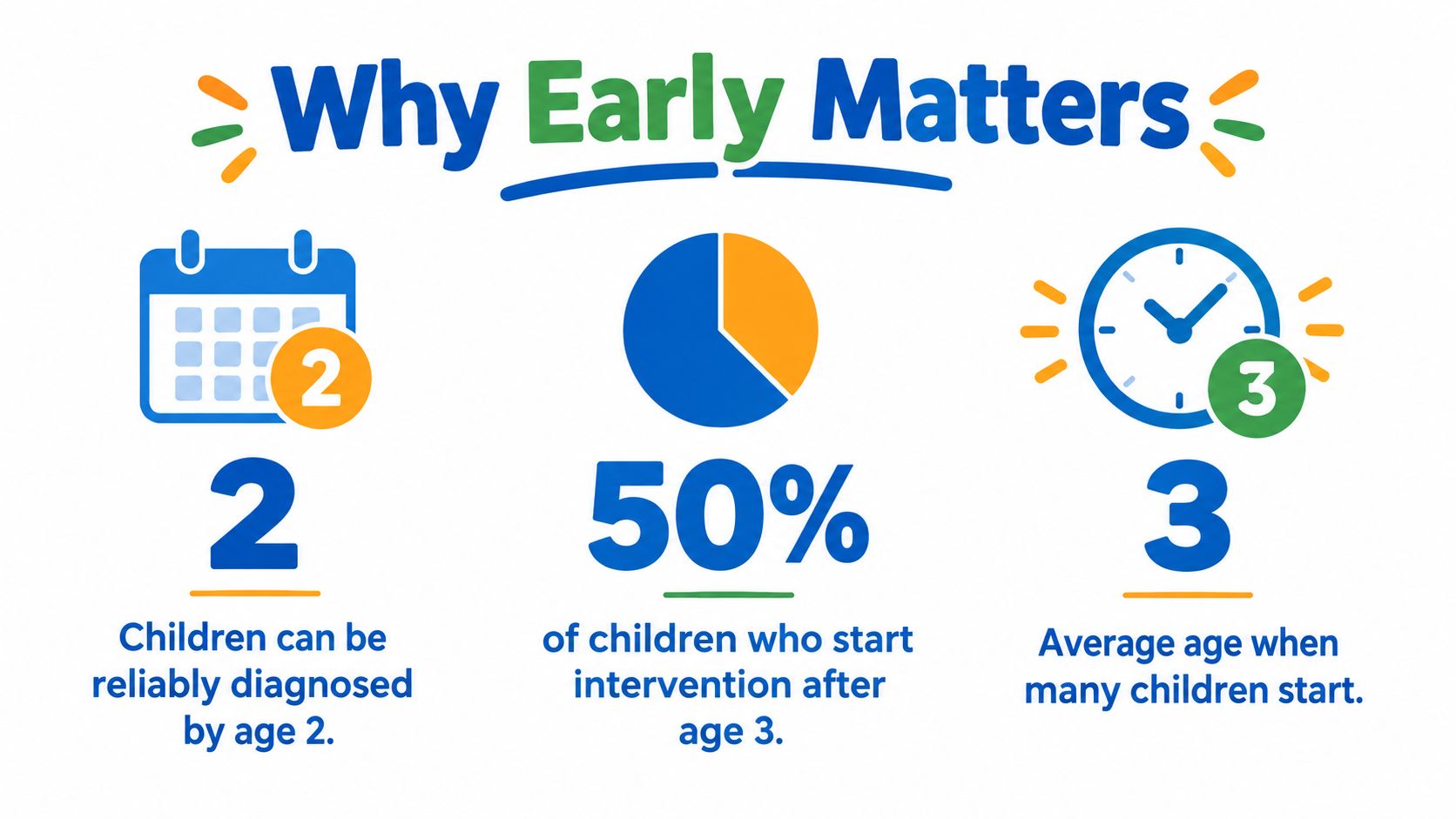
A child may be diagnosed with autism by age 2, yet the average diagnosis age remains about 5. The ASAT early intervention overview notes that intervention begun before age 4 is associated with stronger cognition, language, daily living, and social skills. A delayed referral can therefore create a gap between recognizing a concern and receiving support.
Access also varies by location. State-level data show that the average age of first intervention ranges from 3.7 to 7.2 years, including 3.7 years in Delaware and Kentucky and 7.2 years in West Virginia (ASAT early intervention overview). These delays can reflect referral routes, eligibility steps, staffing, or waitlists. They are not proof that a parent failed to act.
What the studies do and don't say
Research results depend on what researchers measure. One review found significant average effects on social communication, reporting g = 0.36 across 1,442 children in 29 studies. Gains were larger when goals connected to everyday contexts and when intervention began around age 3.8 years (Springer review). The same review found little-to-no effect on autism symptomatology, cognition, or language by age 3 in interventions started during the first 2 years when blinded clinician-rated measures were used.
The apparent conflict dissolves when you focus on real-world skills rather than clinical labels. A child might make more successful requests, take turns more often, or manage transitions with less distress even when a broad symptom score changes little. Developmentally targeted support and caregiver implementation quality may matter more than raw therapy volume, according to the JAMA meta-analysis cited above.
An infographic titled Why Early Matters illustrating that autism can be diagnosed by age two.
Understanding IDEA Part C and Your Path to a Free Evaluation
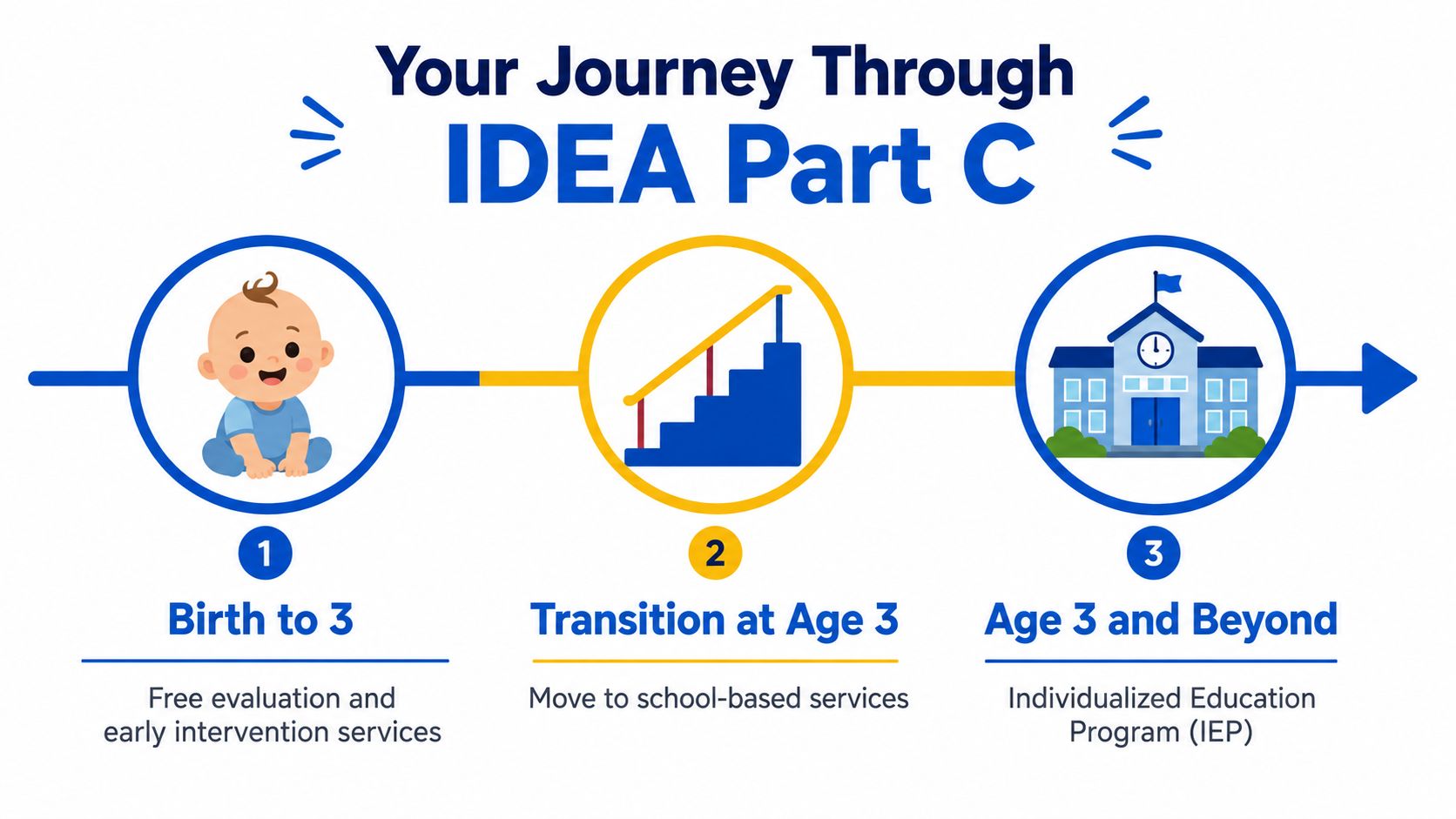
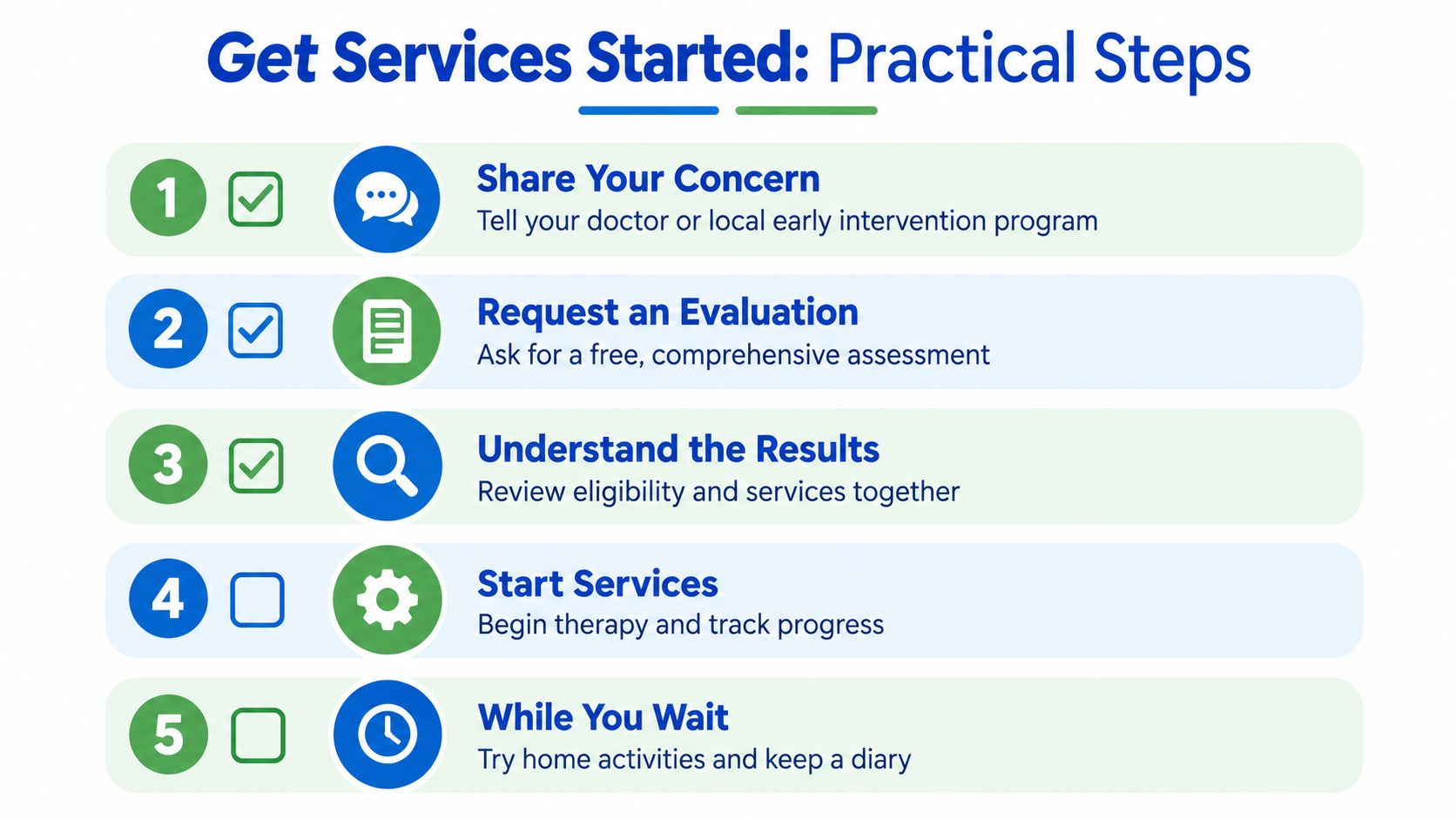
A parent may raise a concern, receive a referral, and then wait without knowing which office handles the next step. For children from birth to age 3, IDEA Part C provides the public framework for early intervention. Families can contact their state's public early childhood system and request a free evaluation, often called a Child Find evaluation. A diagnosis is not required to make that request.
How age affects the public pathway
Before age 3, begin with the state early childhood system. Around a child's third birthday, ask how the current plan will transition. At age 3 and beyond, contact the local public school system about an evaluation and possible school-based support.
The change can feel like moving from one door to another. The responsible office, paperwork, eligibility rules, and service setting may all change, so ask for the name and contact information of the person coordinating the transition.
School-based services may involve an Individualized Education Program, commonly called an IEP. The IEP process and Part C process are related, but they are not the same program.
If a program says you need to “wait and see,” ask what happens next, who owns that step, and when you should follow up.
What an evaluation can tell you
An evaluation provides a detailed snapshot of your child's strengths and needs, regardless of eligibility decisions. If your child qualifies, the team should discuss services, goals, and what the plan may look like. If your child does not qualify, ask about other supports, referrals, and whether the process should be revisited if concerns continue.
Keep your own record because public systems do not always hand information from one office to the next. Save evaluations, notes, consent forms, contact names, and follow-up dates in one place. When a transition approaches, share those records with the relevant provider or school contact and ask what information they still need.
Eligibility and service decisions depend on your child's circumstances and local rules. Ask the early intervention office, school district, pediatrician, or insurer to explain personal options and required steps.
How to Get Services Started and Keep Them Moving While You Wait
A parent raises a concern, the pediatrician sends a referral, and then the trail can go quiet. The receiving office may be waiting for paperwork, an insurer may require another step, or no one may be clearly responsible for scheduling. This broken pathway can delay movement from first concern to assessment and support. Research reviews describe repeated gaps between screening or parent concerns and timely follow-up, particularly when a positive screen does not lead to action.
What you can do without medical jargon
Begin with a clear record. Note what you observed, when it happened, and which situations are difficult, such as meals, transitions, sleep, communication, or play with other children. Specific examples give your pediatrician, early intervention office, or school contact something concrete to discuss.
After a referral, call the receiving office. Ask whether it arrived, whether anything is missing, and what the next step will be. If your child has already had a screening, ask how the result will be reviewed and who will contact you. A screening can identify concern, but it does not by itself explain every service or eligibility decision.
Short written follow-ups can keep the handoff from disappearing. After a call, send an email that names the person you spoke with, the documents discussed, and the date you were told to expect an update.
Keep the handoff visible
Use these prompts during calls:
- Who is responsible for the next action? Ask whether the office, provider, school contact, or your family must schedule or submit something.
- What support can begin while we wait? Ask about available interim services, parent guidance, or referrals under your local program rules.
- What information should I receive in writing? Request confirmation of appointments, required forms, wait-list status, and follow-up dates.
- What should I do if the wait continues? Ask when to call again and whether another office can help while the referral is pending.
Local shortages, limited school resources, and differences in access can create delays that are not caused by your paperwork or persistence. You can still ask each contact to identify the next owner and record a specific follow-up date. If your child's needs change, tell the pediatrician or service coordinator rather than waiting for the original appointment.
While waiting, use a one-page referral tracker. Create columns for the office, person contacted, phone number, date, request, response, documents needed, and next follow-up. Bring it to appointments and share relevant details with your provider or insurer. The goal is not to diagnose your child at home. It is to keep useful information and unanswered questions together until the right professional can review them.
Exploring Payment Options for Early Intervention and ABA Services
A family may receive a service recommendation, then discover that the provider, insurer, and public program each need different information. The paperwork can feel like several doors opening onto separate hallways. Start by asking the plan what it needs before assuming a service is covered.
“The right question is usually not ‘Is it covered?’ It's ‘What exactly does my plan need from me to decide?’”
That question can reveal whether the next step is a diagnosis, an evaluation report, prior authorization, a referral, or a specific claim form. Ask the representative to explain the requirement in writing and give you a reference number for the call.
Payment routes families may consider
| Pathway | Who it may help | What to ask or check | Typical timeline |
|---|---|---|---|
| Private insurance | Families with employer or individual health plans | Ask whether autism-related behavioral health services, including ABA, are covered, whether prior authorization is required, and whether the provider is in network | Benefits review before services begin, with plan-specific approval steps |
| Medicaid | Eligible children enrolled in Medicaid | Ask whether the state program covers medically necessary autism-related services under the child's benefit rules and what documents are required | Timing depends on eligibility review, authorization, and provider availability |
| Out-of-network reimbursement | Families who cannot find an in-network provider quickly | Ask whether claims are allowed, how reimbursement works, and which forms or receipts are needed | Often depends on claim processing and the plan's review |
| Public early intervention or school services | Children who meet state or school criteria | Ask which services have no direct cost or follow separate program rules, and whether the evaluation is free | Follows the public program's evaluation and eligibility process |
| Assistance or grant programs | Families seeking help with costs | Ask about eligibility limits, funding windows, and whether support applies to evaluation, therapy, or transportation | Funding may depend on application timing and available support |
A U.S. government source explains that Medicaid's EPSDT benefit requires state Medicaid programs to cover medically necessary treatment for enrolled children under 21. The framework can include autism-related behavioral health services, including ABA, when medically necessary, although eligibility, authorization, and state rules affect access (EPSDT and autism-related care). Private plans remain more specific to the policy, so the benefits representative is the right person to confirm requirements.
If your child has Medicaid, ask the member services number whether the state requires a formal diagnosis, a developmental evaluation, a referral, or authorization before a provider can bill. Ask who submits each document and what happens if the first provider has no opening. Those answers can prevent a recommendation from sitting unused while offices assume someone else is handling the next step.
For practical ideas while you sort through coverage, see these autism parent resources. Keep the insurer's answers with your referral records, and ask your provider or insurer about personal coverage decisions before paying for services yourself.
Next Steps and How ABA Finder May Help Your Family
A good next move is usually simple. Write down your child's current concerns, call the right public program for your child's age, ask your provider what they recommend, and check your insurance benefits with specific questions about autism-related services. If your family prefers person-first language, keep using “child with autism.” If your community prefers identity-first language, that's a valid preference too, and many families choose what feels most respectful in their own home.
For a practical overview after diagnosis, the page at after autism diagnosis can help you think through the immediate next conversations. The main takeaway is steady, not rushed, progress. You don't have to solve every part of the system in one phone call.
ABA Finder may help families compare local ABA provider options where available, understand insurance and out-of-network pathways, and ask better questions about affordability. If you want help sorting through options, you can reach out and review what may fit your situation without pressure or a commitment.
If you're trying to figure out what comes next, ABA Finder can help you sort through provider options, insurance questions, and possible payment paths in plain language. Visit ABA Finder to get help understanding your choices and finding a provider path that may fit your family's needs.
Our Latest Insights








Every Child Deserves Access To Quality ABA Therapy
Whether you're searching for providers, exploring financial assistance, or trying to better understand your insurance options, we're here to help you take the next step with confidence.