



10 Autism Help for Families Resources
Find autism help for families, from insurance and grants to education, respite, providers, and peer support, with eligibility notes and contact points.

A caregiver's day can fill up before the first appointment is even scheduled. You may be comparing ABA providers, trying to decode insurance terms, answering school emails, searching for financial assistance, and wondering where your family can find a little breathing room.
ABA, or Applied Behavior Analysis, is a behavior-support therapy approach that may help a child build communication, daily living, learning, or other practical skills. It isn't the only possible support, and the right fit depends on the child, family priorities, provider, and clinical recommendations. Insurance rules, eligibility, waitlists, provider capacity, and available programs vary by state, plan, and organization.
This list organizes autism help for families by the problem you're trying to solve: finding care, paying for it, working with the school, accessing targeted assistance, or finding community. Use each resource as a starting point, then confirm current details directly with the provider, insurer, school, state agency, or nonprofit.
Table of Contents
1. ABA Finder
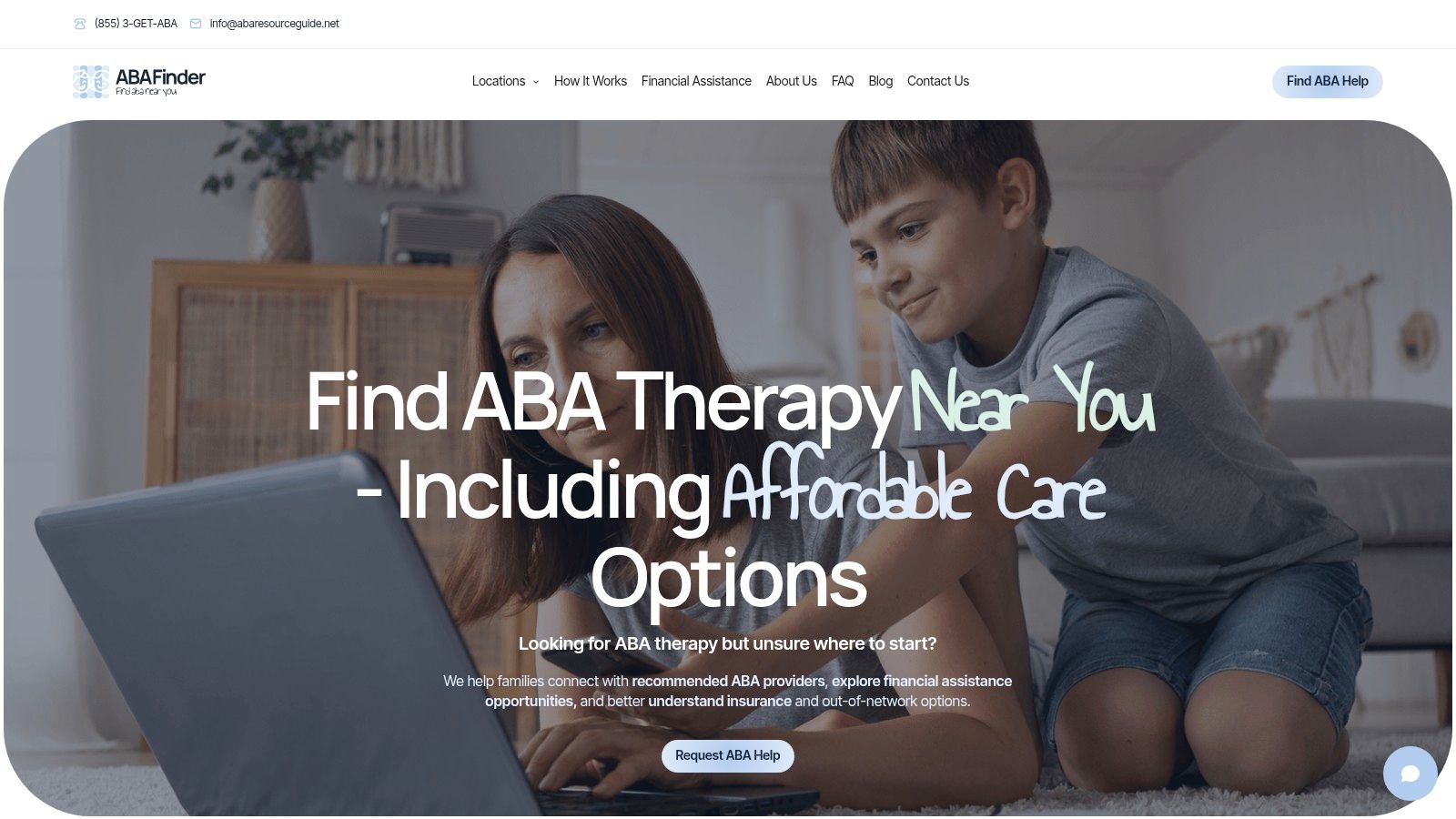
Families who need both a provider search and help understanding payment options may find ABA Finder a practical first conversation. The service offers a no-cost, no-obligation intake and consultation for families seeking recommended Applied Behavior Analysis providers and guidance on possible ways to pay for care. Its secure intake gathers location, family needs, and therapy requirements before reviewing local options.
ABA Finder currently serves families in Connecticut, Florida, Georgia, Maryland, Massachusetts, New Jersey, New York, North Carolina, South Carolina, Virginia, and Washington. Provider introductions depend on the service area, recommendations available, and provider capacity. The service can also review private insurance, potential out-of-network benefits, and possible affordability resources such as grants or income-based payment programs. Eligibility and funding outcomes vary, and ABA Finder doesn't guarantee coverage, financial assistance, or placement.
What families can expect
The process is designed to reduce the number of separate calls a caregiver has to make:
- Share family details: Submit location and therapy information through a secure, privacy-conscious intake.
- Review payment pathways: Discuss insurance, out-of-network reimbursement possibilities, and potential financial assistance.
- Receive next steps: Get provider introductions or other recommendations when suitable options are available.
- Ask follow-up questions: Use the consultation to clarify likely documentation needs, payment questions, and the next conversation to have with an insurer or provider.
The service is especially relevant when an in-network search has produced a long wait or when insurance language is difficult to interpret. Coverage reforms have made ABA more widely available in major U.S. insurance markets, but requirements can still differ by state, plan type, age, and medical-necessity rules, as described in the Autism Speaks guidance on autism insurance coverage.
Limits to keep in mind
ABA Finder is a connector and adviser, not the treating provider or payer. It can't promise that a recommended provider accepts your plan, has an opening, or can use a particular payment arrangement. Families should ask the provider and insurer to confirm authorization, deductible or coinsurance responsibilities, out-of-network reimbursement, clinical documentation, and scheduling.
For a plain-language overview of the search process, read how to find autism care near you, then visit ABA Finder to submit an inquiry.
2. Autism Speaks Autism Response Team
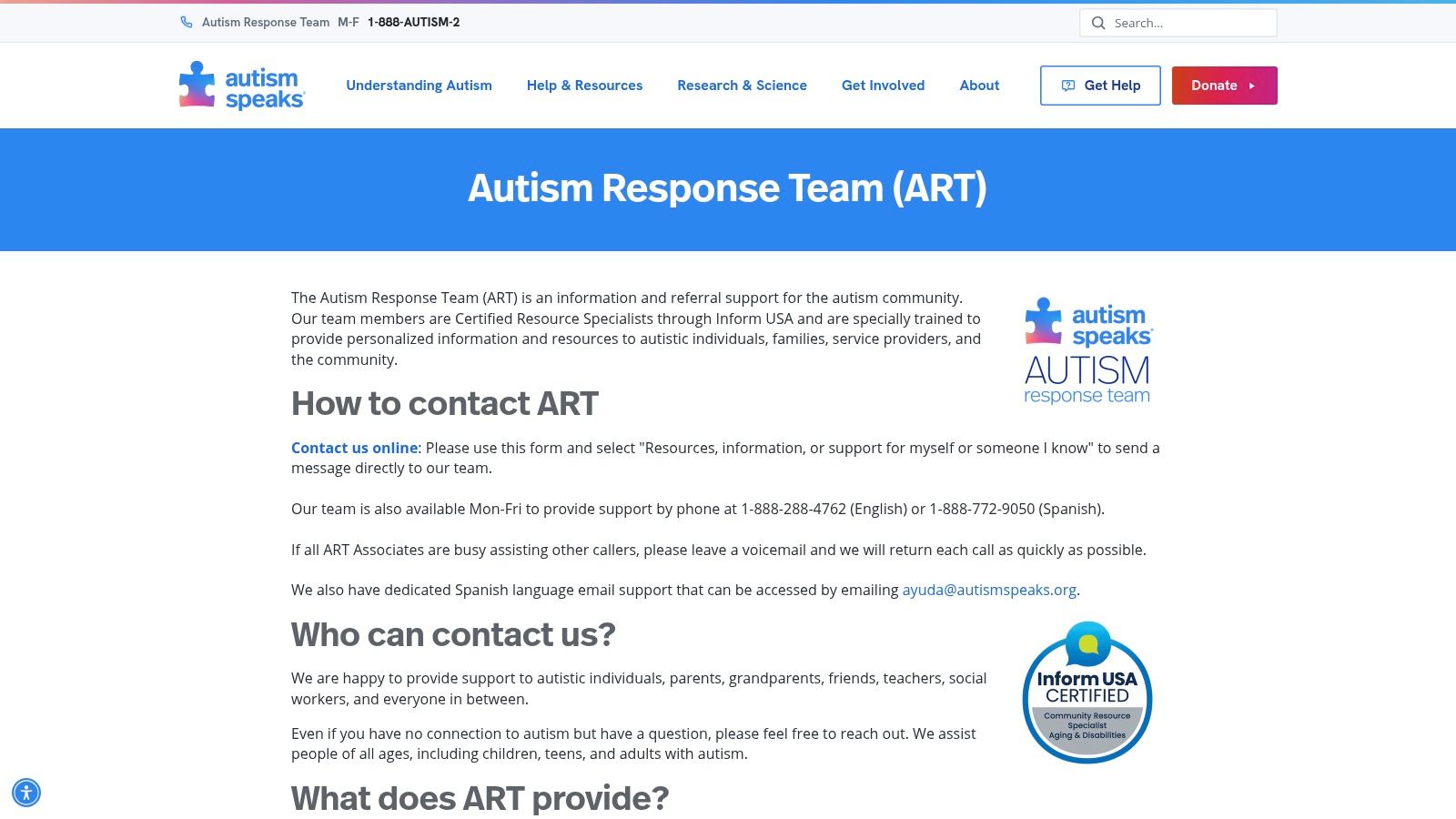
When you need a person to help sort through several questions at once, the Autism Response Team, or ART, can be a useful starting point. Its Certified Resource Specialists help families understand possible services, locate local supports, and identify practical next steps. Assistance is available in English and Spanish, which can make the first conversation easier for more households.
ART isn't generally a direct funder for every family need. Instead, it provides information and referrals that may point you toward providers, community programs, financial assistance, or educational materials. Its Autism Response Team resource page also connects families with a financial assistance hub, planning tools, and toolkits for newly diagnosed children, school concerns, and adulthood planning.
Best use for a stressed caregiver
Contact ART when you don't yet know which category of help you need. A specialist may help you turn a broad concern, such as “we need therapy and help paying for it,” into more specific questions about local providers, grants, school supports, or public programs.
Before contacting the team, write down your location, your child's age, the support you're seeking, current insurance, and whether you're already on a waitlist. Ask which referrals are current, whether a provider is accepting new families, and whether a financial resource has its own application deadline or eligibility rules.
ART's usefulness depends partly on local resource availability, so confirm every referral directly. Ask the organization whether it's an information service, a referral, an application program, or a provider. That distinction helps prevent an encouraging referral from being mistaken for an appointment or funding decision.
3. Autism Society of America National Helpline and Autism Source
Families often need both personal guidance and a searchable directory. The Autism Society of America combines those functions through its National Helpline and Autism Source, a U.S.-wide database for local providers and supports. Trained Information and Referral specialists can offer personalised referrals rather than leaving you to sort through a long list alone.
How to use the directory well
Start with the Autism Society National Helpline if you're unsure what type of local help fits your situation. You can ask about therapy providers, support groups, education resources, employment, housing, or other community services. Autism Source can then help you investigate organizations in your area.
Local affiliate chapters may offer community programs, advocacy, and support groups. Their services aren't identical from one location to another, so ask what the nearby affiliate provides, whether there's a wait, and whether a program is intended for caregivers, children, teenagers, or adults.
Ask for a referral you can act on: Find out who to contact, what information to provide, whether the organization has current capacity, and which questions the affiliate can't answer.
This resource is particularly helpful when your needs extend beyond ABA. A family might use the helpline to locate a therapy provider, then contact a local affiliate for a caregiver group or community activity. During busy periods, responses may take time, so keep a record of calls and follow up if you don't hear back.
4. The Arc
The Arc is a broad disability-support and advocacy network for people with intellectual and developmental disabilities, including children with autism. It can be a strong choice when the problem isn't only finding therapy, but understanding public benefits, special education, community living, or longer-term planning. The network includes nearly 600 local chapters, although each chapter's services and capacity differ. Learn more through The Arc's national network.
Where The Arc may help
A local chapter may provide systems navigation, help families understand disability benefits, or connect them with support related to Medicaid, waivers, and community services. Some chapters also offer special education assistance, future-planning tools, and guidance about financial or caregiving arrangements.
The Arc isn't autism-exclusive. That broad focus can be an advantage when your child's needs involve several disability systems, but you may need to explain the autism-specific question clearly. For example, ask whether the chapter can help with an Individualized Education Program, a public-benefit application, transition planning, or a local service referral.
Chapter services may include fees, and availability can change. Confirm whether the person you're speaking with offers information, case navigation, advocacy, or legal services. If you need advice about a specific dispute, benefit denial, or legal matter, ask what type of professional referral is appropriate rather than relying on general information.
5. Easterseals
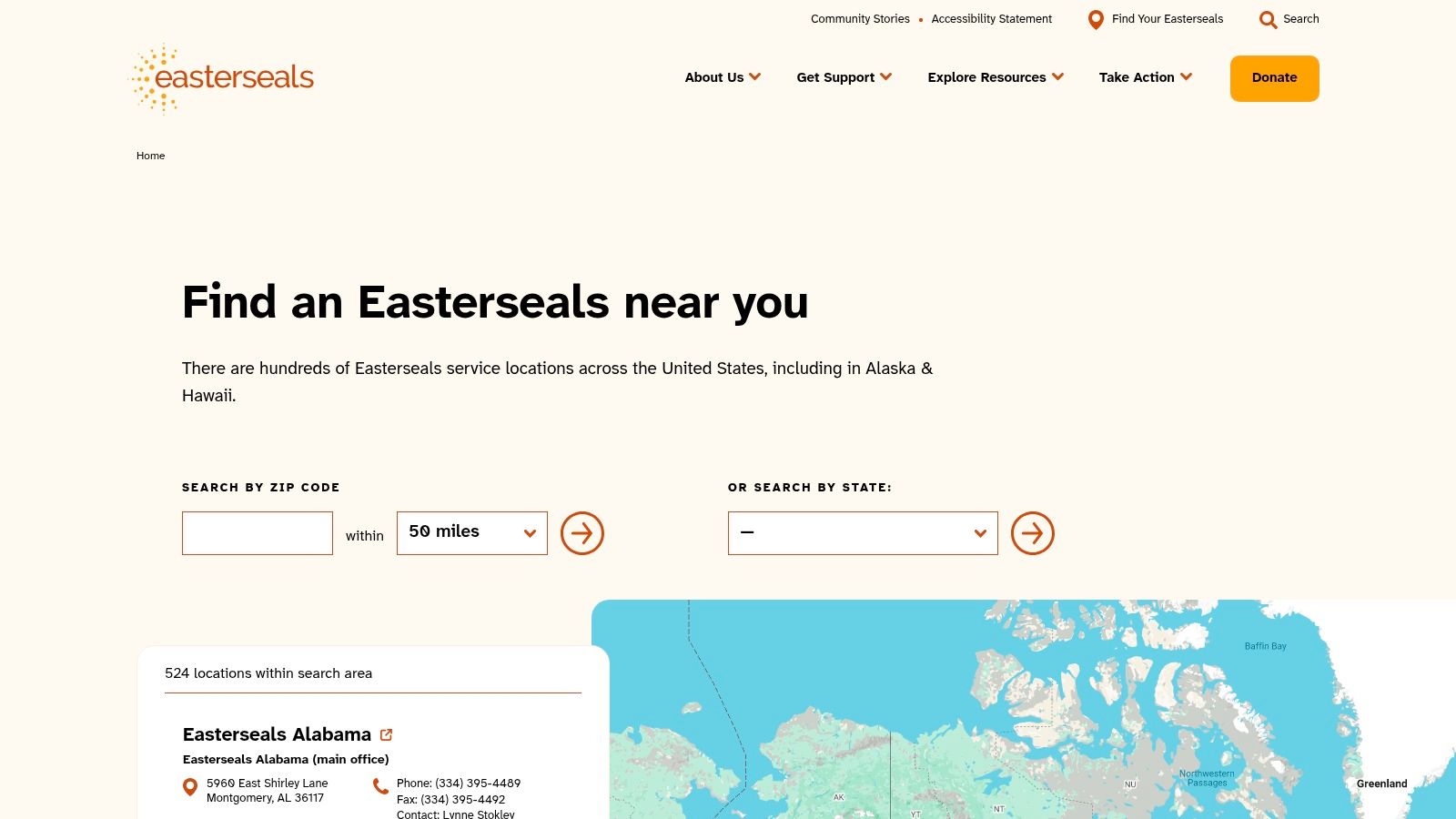
Easterseals can appeal to families who want to explore several types of support through one local organization. Its network may include autism services such as ABA, speech therapy, occupational therapy, social skills groups, early intervention, respite, family training, and caregiver coaching. Use the Easterseals location finder to identify the nearest affiliate and ask what it currently offers.
What to confirm with a local affiliate
The national name doesn't mean every location provides the same services. One affiliate may offer in-home ABA, while another may focus on early intervention, family coaching, or community programs. Ask whether the location serves your child's age group, whether it has an opening, and whether its clinicians are accepting new referrals.
Insurance participation, waitlists, pricing, and financial-assistance policies are local questions. Call before assuming that a service listed in general information is available nearby or covered by your plan. Ask for the billing department or intake coordinator if you need details about authorizations, out-of-network care, or expected family costs.
Before joining a waitlist, ask whether you can remain on it while pursuing another provider. Also ask how the affiliate updates families when capacity changes.
Easterseals may be useful when your child needs coordinated support from more than one discipline. Still, a single organization doesn't necessarily mean one appointment schedule, one authorization, or one payment process. Request a written explanation of which services are available, who provides them, and how each service is billed.
6. Family Voices Family-to-Family Health Information Centers
Insurance questions can feel impossible when you're already managing appointments and school responsibilities. Family Voices connects families with Family-to-Family Health Information Centers, or F2Fs, which are family-led programs that help caregivers understand health coverage, Medicaid and CHIP, waivers, care coordination, and community resources. Its network reaches every state, Washington, D.C., territories, and tribal communities, but local appointment availability varies.
A good fit for coverage navigation
Contact your state's F2F when you need help understanding a denial, comparing coverage pathways, preparing for an insurance call, or locating a public program. The service focuses on health systems rather than serving as a therapy provider. A family can use it to prepare better questions for an insurer without treating the F2F's guidance as a coverage decision.
Medicaid rules are particularly state-specific. Federal guidance explains that ABA is one treatment option, but Medicaid doesn't require one single autism treatment. State agencies determine medical necessity for eligible children and apply Early and Periodic Screening, Diagnostic, and Treatment rules for children from birth through age 21, as explained in CMS Medicaid autism guidance.
Use Family Voices to locate your state program, then ask whether it can help with your specific plan. Have your insurance card, denial or authorization letters, provider information, and notes from previous calls nearby.
Families looking for broader caregiver support can also read these autism parent resources. Educational legal advocacy usually belongs with a Parent Training and Information Center, so pair the two resources when the same issue affects both healthcare and school.
7. Parent Training and Information Centers
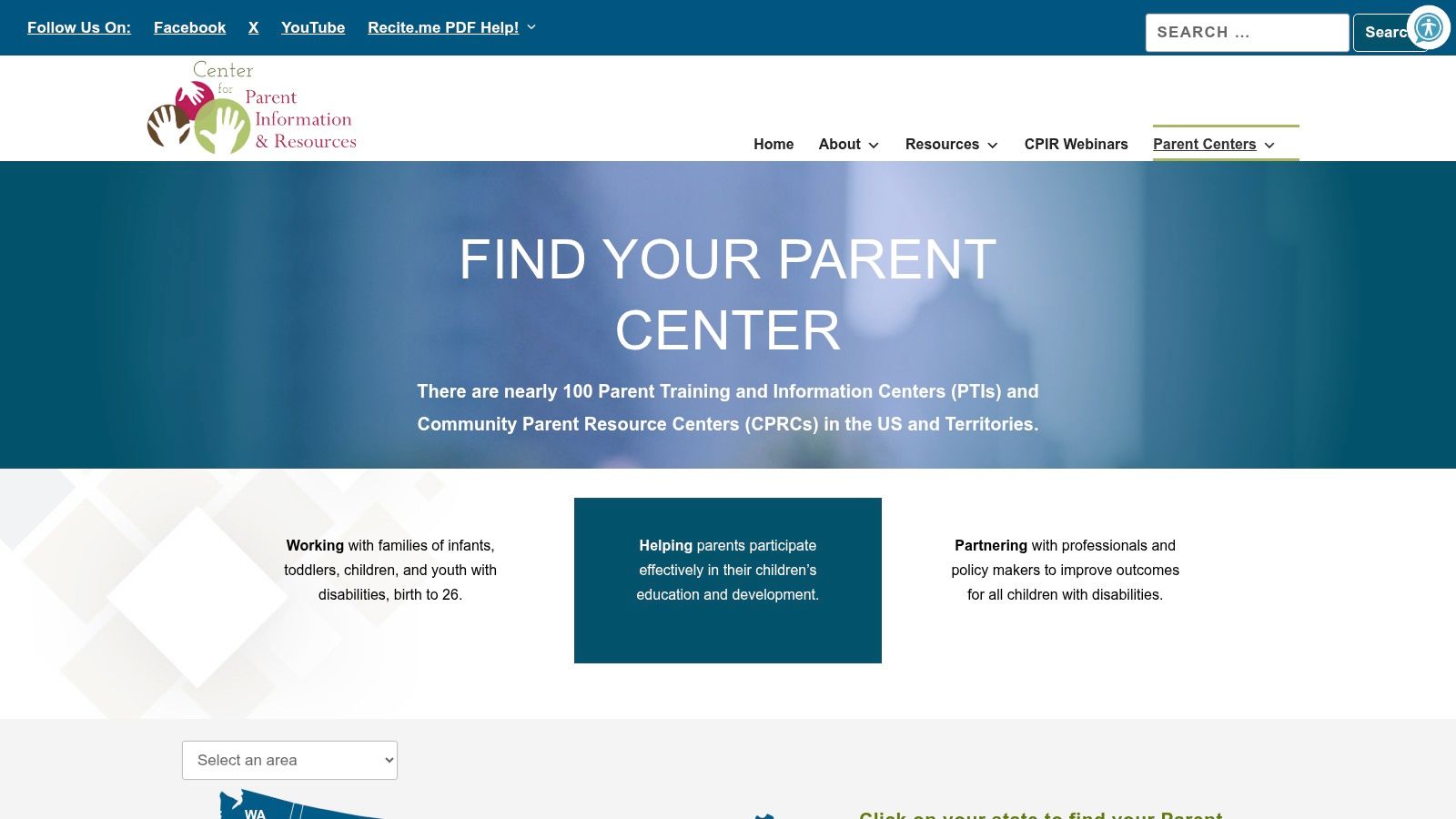
If your most urgent concern is school, start with a Parent Training and Information Center, often called a PTI. The Center for Parent Information and Resources helps families locate their state's PTI or Community Parent Resource Center. These programs support parents of students with disabilities from birth through age 26 with topics such as special education, IEPs, Section 504 plans, procedural safeguards, and dispute resolution.
Bring a clear school question
You don't need to understand every special education term before asking for help. Describe what's happening in plain language, such as difficulty getting an evaluation, disagreement about services, repeated communication problems, or uncertainty about an upcoming meeting. A PTI may offer workshops, one-to-one guidance, or information about the process in your state.
The Center for Parent Information and Resources locator can direct you to the appropriate state organization. Programs are supported through the special education system, including backing from the U.S. Department of Education, but services and appointment availability vary.
A PTI can help you prepare for a school conversation, understand documents, and organize questions. It doesn't replace your child's medical provider, insurer, or attorney. If the issue involves ABA authorization or a medical bill, ask Family Voices or your insurer for healthcare guidance as well.
Keep copies of evaluations, school notices, current plans, and your own notes. Ask the PTI what documents it wants before the appointment and whether it offers interpretation or materials in your preferred language.
8. Parent to Parent USA
Professional referrals can answer procedural questions, but they don't always answer the human questions. Parent to Parent USA connects caregivers with trained volunteer parents for free, confidential, one-to-one peer support. Matches may consider a child's age, diagnosis, and family needs, giving you a chance to speak with someone familiar with a similar path.
What peer support can and can't do
A parent match may help you prepare for a provider call, think through a school meeting, or feel less alone while waiting for services. Many state programs also offer father-specific or Spanish-language resources. Use the Parent to Parent USA support finder to look for a nearby program.
Peer support is experiential, not clinical or legal. A volunteer can tell you what helped their family, but their insurance plan, child, state, and provider may be different from yours. Confirm medical, financial, education, and legal information with the relevant professional or agency.
You can make the match more useful by sharing the kind of support you want. Tell the program whether you're seeking emotional encouragement, practical preparation for an appointment, or connection with another caregiver facing a similar transition. Local chapter capacity affects how quickly a match can be arranged.
This resource works well beside clinical and advocacy services. A caregiver might speak with a Parent to Parent volunteer for perspective, then take specific insurance questions to Family Voices or a provider's billing office.
9. National Autism Association Safety and Communication Programs
Some families need targeted help with safety or communication rather than a general referral. The National Autism Association offers programs focused on wandering prevention, safety education, and communication access. Its Big Red Safety Box program provides safety materials, while the Give A Voice program offers defined, limited assistance related to augmentative and alternative communication, or AAC, and certain communication supports.
Match the program to the immediate need
Use the National Autism Association programs page to review current criteria and application materials. If safety is the priority, read the requirements for the Big Red Safety Box and related resources. If your child is nonspeaking or reliably nonspeaking, review Give A Voice information to see whether the current application covers the type of communication support you're considering.
Program availability, inventory, award amounts, and application windows can change. Receiving information about a program isn't the same as being approved. Ask whether applications are open, which documents are required, and whether assistance is available in your location.
AAC decisions should be discussed with qualified professionals who understand your child's communication needs. The program may support an eligible request, but it doesn't replace an individualized evaluation or guarantee access to a particular practitioner. Access to S2C or RPM support may also depend on local practitioner availability.
These programs are most useful when paired with a broader plan. A caregiver might seek safety materials from NAA, discuss communication options with a qualified provider, and use a school team or PTI to explore supports in the educational setting.
10. UnitedHealthcare Children's Foundation Medical Grants
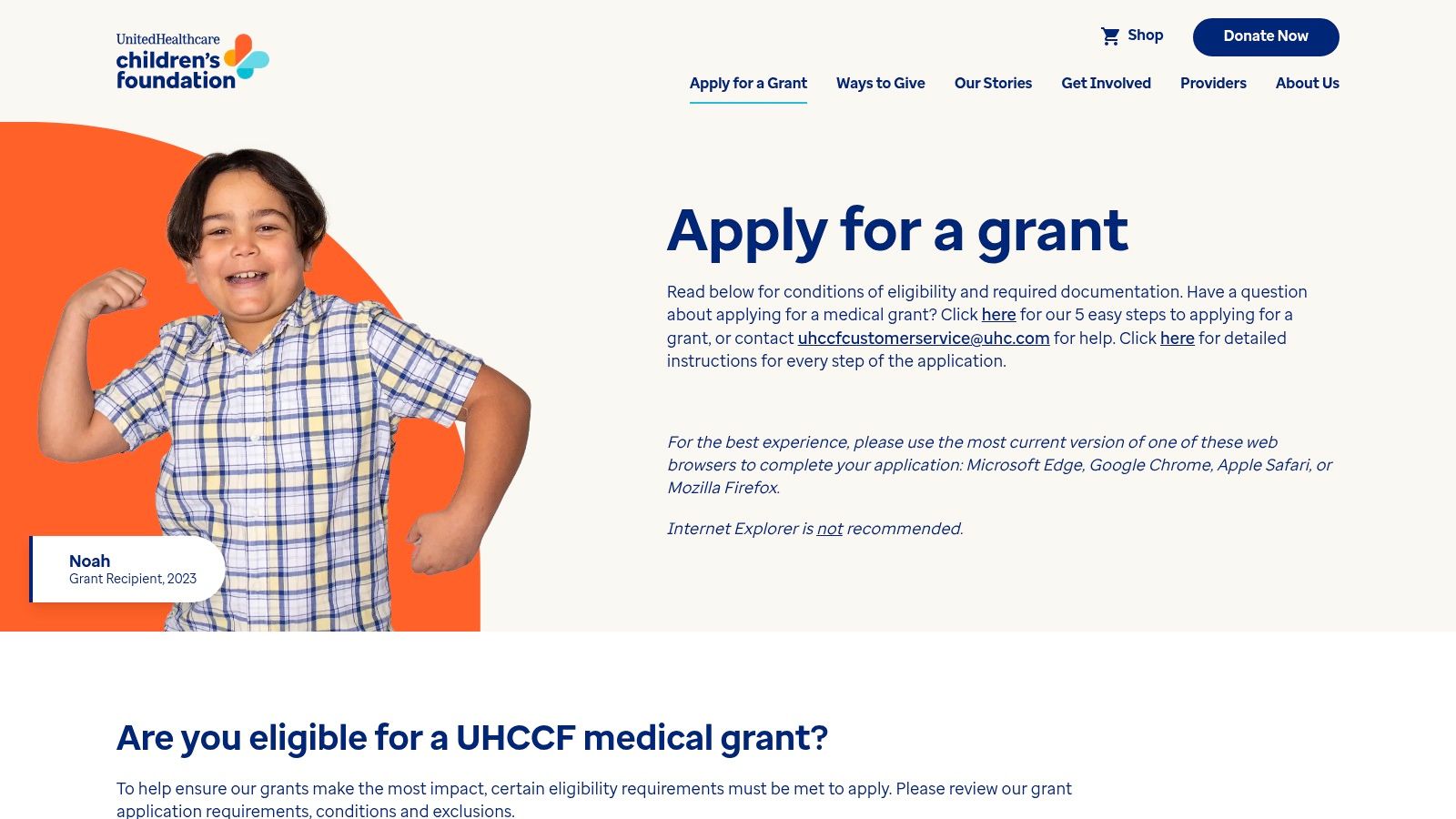
Families with commercial insurance who still face uncovered medical or therapy costs may want to review the UnitedHealthcare Children's Foundation, or UHCCF. The program offers need-based medical grants of up to $5,000 per 12 months, with a lifetime maximum of $10,000, subject to the program's rules and documentation requirements. The UHCCF grant application page explains current eligibility and the application process.
Read the restrictions carefully
The program requires a child who is 16 or younger, commercial primary insurance, and compliance with income requirements. Some autism-related services, including ABA for children ages 3 to 6 in certain categories, may be eligible under program rules. Grants may reimburse families or pay providers directly, but approval isn't automatic and the program doesn't cover every service or expense.
Applications require documentation, and regional boards review requests on a regular schedule. This isn't an emergency funding source, so ask whether your expense can wait for review and whether the provider must submit information. Confirm that the planned service, provider, insurance arrangement, and remaining balance fit the current criteria before relying on the grant.
For a broader explanation of factors that can affect ABA expenses, read this guide to ABA therapy cost per hour. Then compare its general information with your insurer's benefit documents and the provider's written estimate.
A grant possibility is not the same as a payment plan. Keep pursuing insurance authorization and ask the provider what happens if the application is delayed, declined, or approved for less than the balance.
10 Autism Family Support Resources Compared
| Service / Core focus | Quality (UX) ★ | Affordability & Funding 💰 | Target audience 👥 | Unique selling point ✨ |
|---|---|---|---|---|
| 🏆 ABA Finder | ★★★★ | 💰 Free intake & consultation; maps insurance & aid options | 👥 Families seeking ABA + payment clarity (select states) | ✨ Cost-navigation + out‑of‑network strategies; secure, streamlined provider introductions |
| Autism Speaks – ART | ★★★★ | 💰 Guidance & grant‑finding tips (rare direct funding) | 👥 Families nationwide needing quick referrals & planning (EN/ES) | ✨ Certified Resource Specialists; broad toolkits |
| Autism Society – Helpline & Autism Source | ★★★★ | 💰 Referral to local resources; funding varies by area | 👥 Families seeking local supports and referrals | ✨ Searchable national directory + helpline |
| The Arc (national + chapters) | ★★★★ | 💰 Systems navigation; some local fees possible | 👥 Families needing benefits/waiver advocacy & long‑term planning | ✨ Strong rights‑based advocacy and waiver expertise |
| Easterseals (local affiliates) | ★★★★ | 💰 Service fees & assistance vary by affiliate | 👥 Families seeking multiple therapies (ABA, OT, speech) | ✨ One‑stop access to multiple therapy types locally |
| Family Voices – F2Fs | ★★★★ | 💰 Free coaching on Medicaid/CHIP & coverage pathways | 👥 Families of children with special health care needs | ✨ Statewide family‑led Medicaid/coverage expertise |
| Parent Training & Information Centers (PTIs) | ★★★★ | 💰 Free education-focused support (IEP/504) | 👥 Families of students (birth–26) needing school advocacy | ✨ Federally backed IEP/IEE expertise and trainings |
| Parent to Parent USA (P2P) | ★★★★ | 💰 Free peer-to-peer support (no funding) | 👥 Families seeking lived‑experience guidance & emotional support | ✨ One-to-one trained parent matches; local programs |
| National Autism Association (NAA) | ★★★ | 💰 Targeted grants (AAC/safety) but limited supply | 👥 Families prioritizing safety or communication support | ✨ Give A Voice grants; Big Red Safety Box program |
| UnitedHealthcare Children's Foundation (UHCCF) | ★★★ | 💰 Medical grants (up to $5K/12 months; eligibility rules) | 👥 Underinsured families with commercial insurance, children ≤16 | ✨ Clear grant limits and documentation process |
Turn a Long List Into One Next Step
You don't need to contact all ten resources today. Start with the problem that is blocking your family most.
If you can't find an ABA provider, begin with ABA Finder in its listed service areas, a local Easterseals affiliate, Autism Source, or the Autism Response Team. Ask whether providers are accepting referrals, whether they work with your plan, and whether out-of-network options are worth investigating. A provider directory can give you names, but only the provider and insurer can confirm current capacity, benefits, authorization requirements, and expected costs.
If payment is the main barrier, contact Family Voices for health coverage navigation and ask your insurer specific questions about medical necessity, prior authorization, deductibles, coinsurance, and out-of-network reimbursement. CMS explains that Medicaid coverage can look different across states because state agencies determine covered pathways and medical necessity. ABA itself isn't specifically listed in one federal Medicaid benefit category, but parts of a treatment plan may be coverable through other categories, such as caregiver training or behavioral coaching, when benefit rules are met, as described in the CMS ABA toolkit.
State examples show why confirmation matters. North Carolina Medicaid describes ABA coverage for eligible children under 21 through its RB-BHT benefit, while Washington's Health Care Authority says qualifying Apple Health members may receive ABA and that some fee-for-service members can choose from a state provider directory. These examples don't determine what another state or plan covers. Check your own state agency, managed care plan, or fee-for-service rules.
If school support is urgent, contact a Parent Training and Information Center. If you need help with public benefits, waivers, or long-term planning, contact The Arc. If you need encouragement from someone who understands the family experience, try Parent to Parent USA. For communication or safety needs, review the National Autism Association's current programs. For a possible commercial-insurance grant, read the UHCCF criteria before gathering documents.
Have these details ready:
- Location and age: State, county or ZIP code, child's age, and preferred service area.
- Insurance information: Plan name, member services number, Medicaid or CHIP status, and any authorization letters.
- Current needs: Provider type, therapy goals discussed with professionals, school concerns, communication needs, or safety priorities.
- Relevant documents: Diagnosis or evaluation records, referral forms, denial notices, school plans, and income or insurance paperwork when an application requires them.
- Questions to verify: Eligibility, availability, waitlist position, provider qualifications, accepted payment methods, estimated family responsibility, and response time.
Families can combine resources rather than choosing only one. ABA Finder may help with provider and payment-pathway questions, Family Voices can help with health coverage navigation, a PTI can support school-related questions, and Parent to Parent USA can provide lived-experience support. Each organization has a different role, and none can guarantee funding, eligibility, placement, or immediate capacity.
If you're in Connecticut, Florida, Georgia, Maryland, Massachusetts, New Jersey, New York, North Carolina, South Carolina, Virginia, or Washington, ABA Finder can help you explore recommended providers and possible insurance or out-of-network pathways. Confirm current service availability directly, and treat any financial assistance discussion as an option to investigate rather than a promised result.
ABA Finder offers a secure, no-obligation way to explore recommended ABA providers, insurance questions, out-of-network options, and possible affordability resources in its service areas. If you're feeling stuck between a provider search and confusing payment choices, visit ABA Finder to share your needs and discuss practical next steps, with funding, eligibility, provider placement, and capacity still subject to confirmation.
Our Latest Insights






Every Child Deserves Access To Quality ABA Therapy
Whether you're searching for providers, exploring financial assistance, or trying to better understand your insurance options, we're here to help you take the next step with confidence.